


 English
  Español
  Français
PCBA Guide: Consumer, Power & Home Appliance PCBA Explained
PCBA (Printed Circuit Board Assembly) is the completed board after all electronic components have been soldered onto a bare PCB — it is the functional heart of virtually every modern electronic product. While the term PCBA applies broadly, the design priorities, component selection, testing requirements, and manufacturing standards differ significantly depending on the application. Consumer PCBA, power PCBA, and home appliance PCBA each represent a distinct segment with its own engineering demands, regulatory requirements, and quality benchmarks. Understanding these differences is essential for product engineers, procurement managers, and anyone sourcing or designing electronic assemblies.
Content
- 1 What PCBA Is and How It Differs from a Bare PCB
- 2 Consumer PCBA: High Volume, Cost Efficiency, and Miniaturization
- 3 Power PCBA: Reliability, Thermal Management, and High-Current Design
- 4 Home Appliance PCBA: Durability, Safety, and Environmental Resilience
- 5 Side-by-Side Comparison of Consumer, Power, and Home Appliance PCBA
- 6 PCBA Testing Methods Across All Three Segments
- 7 Sourcing and Manufacturing Considerations When Specifying PCBA
What PCBA Is and How It Differs from a Bare PCB
A PCB (Printed Circuit Board) is the bare substrate — the laminated board of fiberglass (typically FR4), copper traces, and solder mask — before any components are placed. A PCBA is that same board after it has gone through the full assembly process: component placement, soldering (reflow for SMT components, wave or selective soldering for through-hole components), inspection, and testing.
The PCBA is what actually performs electronic functions. It contains resistors, capacitors, inductors, ICs, connectors, power MOSFETs, microcontrollers, and all other active and passive components needed for the circuit to operate. A typical smartphone PCBA may carry over 1,000 individual components on a multi-layer board no larger than a business card, while a home appliance motor control PCBA might have fewer than 50 components but must handle continuous high-current loads safely.
Key PCBA Manufacturing Processes
- SMT (Surface Mount Technology): Components are placed directly onto the PCB surface and soldered through a reflow oven. Enables high component density and is the dominant method for modern PCBA.
- Through-Hole Assembly: Component leads pass through drilled holes and are soldered on the opposite side. Used for connectors, large capacitors, and components requiring mechanical strength.
- Mixed Assembly: Combines SMT and through-hole on the same board — common in power PCBA and home appliance PCBA where both high-density logic and robust power components are required.
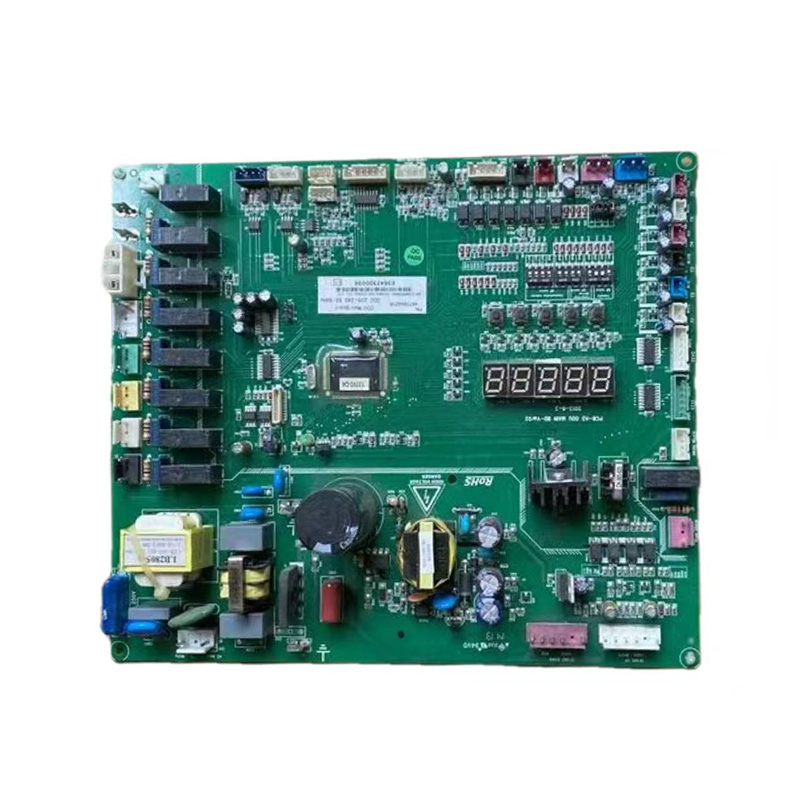
Consumer PCBA: High Volume, Cost Efficiency, and Miniaturization
Consumer PCBA refers to printed circuit board assemblies used in personal electronics — smartphones, tablets, laptops, wearables, wireless earbuds, gaming devices, smart speakers, and similar products. This segment is defined by three overriding pressures: aggressive miniaturization, high production volumes, and intense cost competition.
Design Characteristics of Consumer PCBA
- High layer count: Flagship smartphone PCBAs commonly use 10 to 14 layer boards to route complex signal paths in minimal space. HDI (High Density Interconnect) technology with microvias smaller than 0.1mm is standard.
- Fine-pitch components: BGAs (Ball Grid Arrays) with pitches of 0.4mm or less, 01005 passives (0.4mm × 0.2mm), and chip-scale packages are routine in consumer PCBA.
- RF and signal integrity management: Consumer devices rely on Wi-Fi, Bluetooth, and cellular radios, requiring careful impedance-controlled trace routing and shielding to prevent interference.
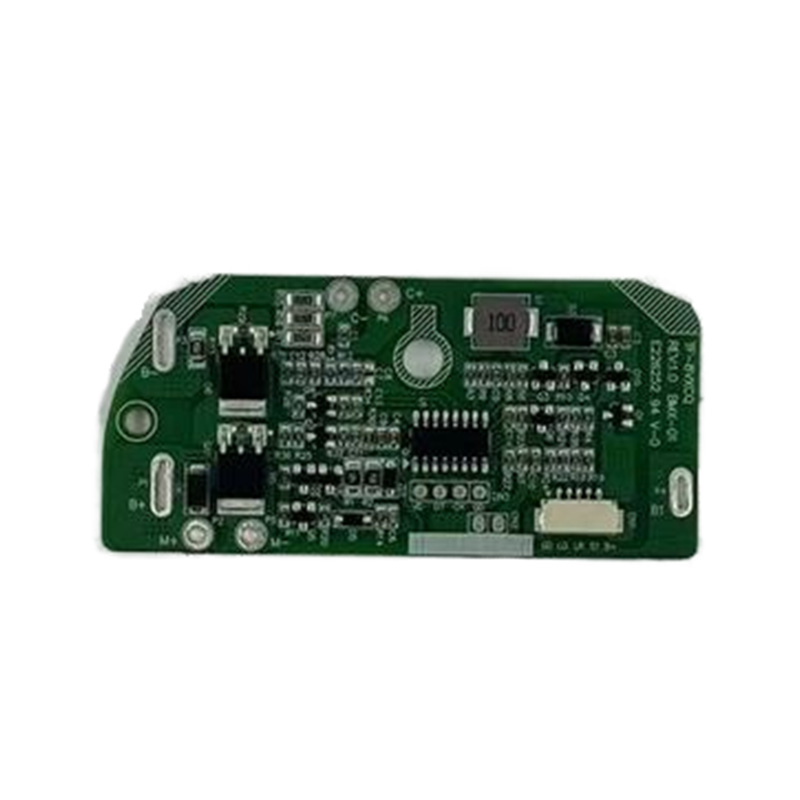
- Battery management circuits: Lithium-ion battery charging, protection, and fuel gauge ICs are nearly universal in consumer PCBA, demanding precise voltage regulation and thermal management.
Manufacturing and Quality Standards
Consumer PCBA manufacturing typically adheres to IPC-A-610 Class 2 acceptability standards, which balance quality with the cost efficiency required for mass-market products. Automated Optical Inspection (AOI), In-Circuit Testing (ICT), and functional testing are standard. For wearables and devices with environmental exposure, conformal coating and IP-rated enclosures add another layer of protection.
Production volumes for consumer PCBA often reach hundreds of thousands to millions of units per year, making SMT line efficiency, solder paste printing accuracy, and automated defect detection critical cost levers. A single percentage point improvement in first-pass yield at this scale can save hundreds of thousands of dollars annually.
Power PCBA: Reliability, Thermal Management, and High-Current Design
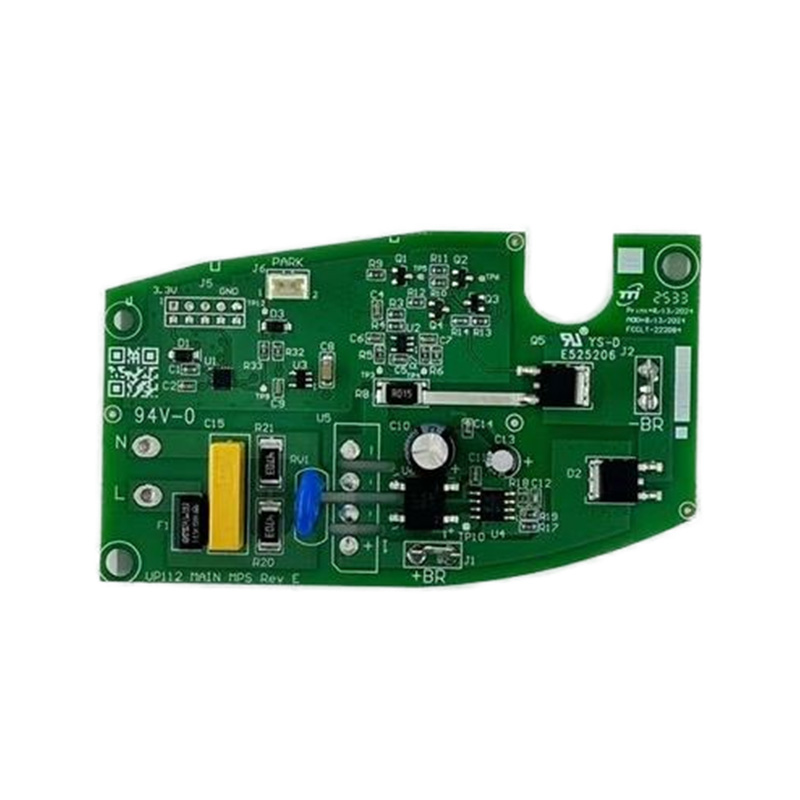
Power PCBA refers to assemblies specifically designed to generate, convert, regulate, or distribute electrical power. This includes switch-mode power supplies (SMPS), inverters, UPS systems, EV charger boards, solar inverter control boards, industrial power converters, and server power supply units. The defining challenge is managing high voltage, high current, and significant heat dissipation reliably over thousands of operating hours.
Critical Design Requirements for Power PCBA
- Wide copper traces and planes: High-current paths require trace widths calculated to handle the load without excessive resistive heating. A trace carrying 10A continuously may require a width of 3mm to 5mm or more depending on copper weight and allowable temperature rise.
- High-voltage creepage and clearance distances: IPC-2221 and IEC 60664 define minimum spacing between conductors at different voltages. A 230VAC mains circuit on a power PCBA requires minimum 3mm clearance and often 6mm or more creepage distance across the board surface.
- Thermal management: Power MOSFETs, diodes, and transformers generate significant heat. Thermal vias, copper pours, heatsink mounting pads, and sometimes metal-core PCBs (MCPCBs) are used to manage junction temperatures and extend component life.
- High-voltage component selection: Bulk electrolytic capacitors, gate drivers, isolation transformers, and power semiconductors (IGBTs, SiC MOSFETs, GaN transistors) must be rated well above the maximum operating voltage — typically with a derating factor of 50% to 80% for voltage-rated components.
- EMI filtering: Power conversion inherently generates electromagnetic interference. X- and Y-capacitors, common mode chokes, and careful PCB layout are required to meet CISPR 32, FCC Part 15, or CE EMC directives.
Testing and Certification for Power PCBA
Power PCBAs for products sold in regulated markets must pass safety certifications including UL 62368-1 (audio/video and IT equipment), IEC 62477 (power electronic converters), and CE marking under the Low Voltage Directive (LVD 2014/35/EU). Hi-pot (high potential dielectric withstand) testing at voltages up to 1,500VAC or 2,121VDC is a standard production-line test to verify insulation integrity between primary and secondary circuits.
Home Appliance PCBA: Durability, Safety, and Environmental Resilience
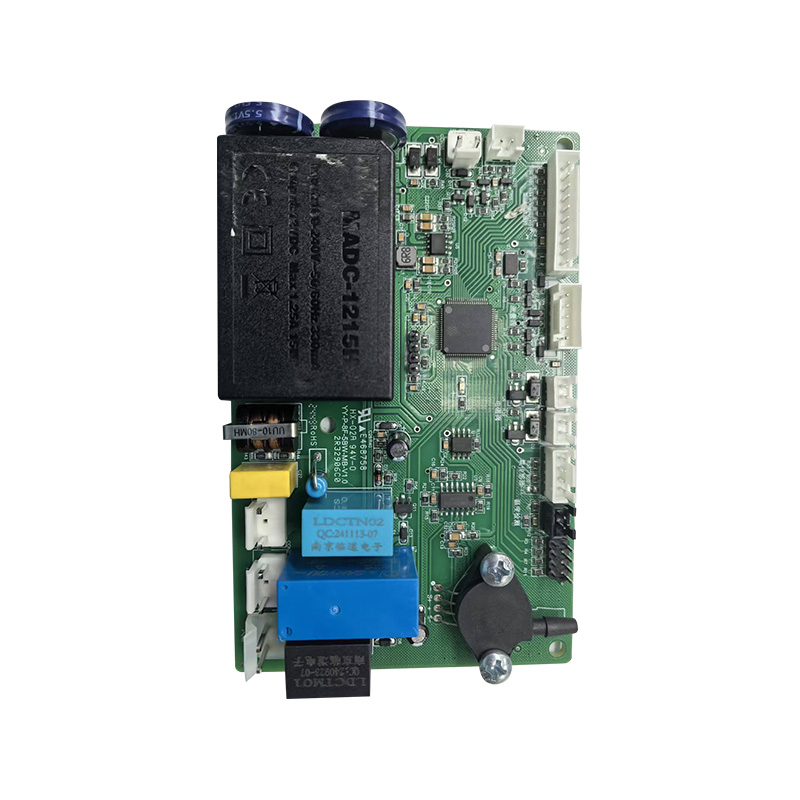
Home appliance PCBA covers the electronic assemblies inside washing machines, refrigerators, air conditioners, dishwashers, microwave ovens, induction cooktops, robotic vacuums, and similar household products. These boards must operate reliably for 10 to 20 years in environments that include heat, humidity, vibration, and exposure to detergents or cooking vapors — conditions far more demanding than typical consumer electronics.
Key Design and Manufacturing Considerations
- Motor control circuits: Appliances like washing machines and air conditioners use inverter-driven motors. The PCBA includes PWM motor drive circuits, current sensing, and protection circuitry that must withstand the electrical noise generated by motor switching.
- Relay and triac control: Heating elements, pumps, and compressors are switched via relays or triacs mounted on the PCBA. These components carry mains voltage and must be selected for the expected switching lifetime — often 100,000 cycles or more.
- Conformal coating: To resist moisture and condensation in refrigerator and washing machine environments, home appliance PCBAs are frequently coated with acrylic, silicone, or polyurethane conformal coating applied after assembly.
- Vibration resistance: Washing machine drum vibration, compressor vibration in refrigerators, and fan motor vibration require through-hole mounting for heavy components and adhesive underfill for large SMT packages to prevent solder joint fatigue failure.
- Wide operating temperature range: Appliance PCBAs may need to function from -10°C (outdoor AC units in winter) to +85°C or above (near heating elements in ovens or dryers), requiring appropriate component temperature ratings and board materials.
Safety Certifications for Home Appliance PCBA
Home appliance PCBAs must meet product safety standards specific to each appliance category. Key standards include IEC 60335 (household and similar electrical appliances), which covers insulation, temperature limits, and protection against electrical shock. Regional certifications — UL in North America, CE in Europe, CCC in China, PSE in Japan — are mandatory for market access and require both design review and production-line testing compliance.
Side-by-Side Comparison of Consumer, Power, and Home Appliance PCBA
| Attribute | Consumer PCBA | Power PCBA | Home Appliance PCBA |
|---|---|---|---|
| Primary Design Priority | Miniaturization, cost | Efficiency, thermal management | Durability, safety |
| Operating Voltage | 3.3V – 20V (DC) | Up to 1,000V+ (AC/DC) | Mixed: low-voltage logic + 230VAC mains |
| Typical Board Layers | 4–14 layers | 2–6 layers | 2–4 layers |
| Assembly Method | SMT dominant | Mixed (SMT + through-hole) | Mixed (SMT + through-hole) |
| Expected Service Life | 2–5 years | 5–15 years | 10–20 years |
| Key Certification | FCC, CE, RoHS | UL 62368, IEC 62477, CE LVD | IEC 60335, UL, CE, CCC |
| IPC Quality Class | IPC Class 2 | IPC Class 2–3 | IPC Class 2 |
| Environmental Protection | Selective (IP-rated enclosures) | Conformal coating common | Conformal coating standard |
PCBA Testing Methods Across All Three Segments
Regardless of application category, quality assurance in PCBA manufacturing relies on a layered testing strategy. The depth and rigor of testing increases with the criticality and expected service life of the product.
- AOI (Automated Optical Inspection): High-resolution cameras scan every solder joint and component placement against a golden reference. Detects missing components, misalignment, solder bridges, and insufficient solder. Used at near-100% coverage in consumer and appliance PCBA lines.
- SPI (Solder Paste Inspection): 3D measurement of solder paste deposits before component placement. Catching paste volume errors before reflow prevents the majority of solder joint defects downstream.
- X-ray Inspection (AXI): Essential for BGA and QFN packages where solder joints are hidden under the component body. Critical in consumer PCBA with high BGA density.
- ICT (In-Circuit Testing): A bed-of-nails fixture applies test probes to test points across the assembled board, verifying component values, opens, shorts, and basic functionality. Common in high-volume consumer and appliance PCBA.
- Functional Testing (FCT): The fully assembled PCBA is powered and exercised through its intended operating modes. For power PCBA, this includes load testing at rated current and voltage. For appliance PCBA, it includes simulating motor control signals, sensor inputs, and relay outputs.
- Hi-Pot Testing: Mandatory for power and appliance PCBAs — verifies dielectric withstand between mains-voltage circuits and accessible conductive parts or secondary circuits.
Sourcing and Manufacturing Considerations When Specifying PCBA
When selecting a PCBA manufacturer or contract electronics manufacturer (CEM), the application type should directly influence the criteria you evaluate:
For Consumer PCBA
- Confirm the facility has HDI capability, fine-pitch SMT lines, and AOI/AXI inspection for BGA packages.
- Verify IPC-A-610 Class 2 certification and experience with your target volume and product category.
- Evaluate supply chain capabilities for component sourcing and lead time management — component shortages hit consumer PCBA programs especially hard.
For Power PCBA
- Require demonstrated experience with high-voltage assemblies and hi-pot testing capability on the production line.
- Confirm the manufacturer understands IPC-2221 clearance and creepage requirements and reviews layouts accordingly.
- Ask about thermal profiling capability for reflow of heavy mixed assemblies with large through-hole transformers and power devices.
For Home Appliance PCBA
- Prioritize manufacturers with conformal coating application and curing capability in-house.
- Confirm experience with appliance-specific certifications (IEC 60335, CCC, PSE) and familiarity with associated documentation requirements.
- Look for reliability testing capabilities — thermal cycling, vibration testing, and HALT (Highly Accelerated Life Testing) — to validate long-term field durability before mass production.

 LET'S CREATE THE FUTURE TOGETHER

Contact Us Anytime
Copyright © Anhui Hongxin Electronic Technology Co., Ltd. All Rights
Reserved.
privacy
Wholesale Printed Circuit Board Suppliers, Manufacturers

