


 English
  Español
  Français
The Ultimate Guide to Fiberglass-Reinforced Plastic PCB: Materials, Advantages, and Applications
The evolution of printed circuit boards (PCBs) is deeply intertwined with advancements in base materials. Among these, Fiberglass-Reinforced Plastic PCB, most commonly using FR-4, has become the backbone of modern electronics. This composite material offers a unique balance of properties that are critical for reliability and performance. For manufacturers and designers, understanding the nuances of this material is key to successful product development. With over a decade of expertise, Anhui Hongxin Electronic Technology Co., Ltd. has mastered the intricacies of producing high-performance PCBs using various substrates, including advanced FR-4 formulations, to meet the rigorous demands of global markets[3].
Content
- 1 What is a Fiberglass-Reinforced Plastic PCB?
- 2 Key Properties and Advantages of FR4 PCBs
- 3 Comparing FR-4 with Other Common PCB Substrates
- 4 Specialized FR-4 Variants and Long-Tail Applications
- 5 Design and Manufacturing Considerations for FR-4 PCBs
- 6 FAQs: Fiberglass-Reinforced Plastic PCB
- 6.1 1. What is the main difference between FR-4 and other FR materials like FR-1 or FR-2?
- 6.2 2. Can FR-4 PCBs be used for high-frequency applications?
- 6.3 3. How does moisture affect FR-4 PCB performance?
- 6.4 4. Why would I choose a high-Tg FR-4 material?
- 6.5 5. Is FR-4 an environmentally friendly material?
- 7
- 8 References
What is a Fiberglass-Reinforced Plastic PCB?
A Fiberglass-Reinforced Plastic PCB uses a substrate where a woven fiberglass cloth is impregnated with an epoxy resin binder. This creates a composite laminate that is both strong and insulating. The "FR" stands for Flame Retardant, a crucial safety characteristic. The most prevalent grade is FR-4, but variations exist to meet specific needs.
Core Composition and Manufacturing
- Reinforcement: Woven fiberglass fabric provides dimensional stability and mechanical strength.
- Matrix: Epoxy resin binds the fiberglass, offering electrical insulation and environmental protection.
- Copper Cladding: Thin layers of copper foil are laminated onto one or both sides to form the conductive pathways.
- Curing Process: The layers are subjected to high heat and pressure, curing the resin into a rigid, solid sheet.
The quality of the final PCB hinges on the precision of this lamination process, an area where experienced manufacturers like Anhui Hongxin Electronic Technology Co., Ltd. excel, ensuring consistent material properties across every batch[1].
Key Properties and Advantages of FR4 PCBs
The dominance of FR-4 in the industry is no accident. Its property profile offers an exceptional cost-to-performance ratio for a vast array of applications.
Mechanical and Electrical Properties
- High Mechanical Strength: The fiberglass reinforcement gives the board excellent rigidity and resistance to bending, vibration, and shock.
- Superior Electrical Insulation: The epoxy resin matrix maintains high resistivity, preventing current leakage between closely spaced traces.
- Dimensional Stability: FR-4 has a low coefficient of thermal expansion (CTE), meaning it retains its shape and size across a wide temperature range, which is vital for reliability.
- Flame Retardancy: Meets UL94 V-0 standards, significantly reducing fire risk—a non-negotiable safety feature.
Performance in Harsh Environments
FR-4 PCBs exhibit good resistance to moisture and most chemicals, which contributes to long-term durability. However, for extreme environments, specialized high-Tg or halogen-free variants are recommended. For instance, the thermal management properties of FR4 PCBs for LED applications are often enhanced by using high-Tg FR-4 or metal-core constructions to better dissipate heat from high-power LEDs, thereby extending their lifespan.
Comparing FR-4 with Other Common PCB Substrates
Choosing the right substrate is a critical design decision. Here’s how FR-4 compares to other popular materials.
The sentence-form comparison highlights key differences: While FR-4 offers an excellent balance of cost, performance, and manufacturability for general use, materials like Polyimide provide superior flexibility for dynamic applications, and PTFE-based substrates offer minimal signal loss for high-frequency circuits. For high-power designs, metal-core boards far surpass FR-4 in heat dissipation capability.
| Property / Characteristic | Fiberglass-Reinforced Plastic (FR-4) | Polyimide (Flexible PCB) | PTFE (High-Frequency) | Metal Core (e.g., Aluminum) |
|---|---|---|---|---|
| Primary Advantage | Cost-effective, robust all-rounder | Extreme flexibility, high temp resistance | Ultra-low dielectric loss (Df) | Exceptional thermal conductivity |
| Typical Application | Consumer electronics, industrial controls, automotive modules | Wearables, foldable phones, aerospace wiring | Radar, 5G/6G, satellite communications | High-power LEDs, power converters, motor drives |
| Relative Cost | Low | High | Very High | Medium to High |
| Thermal Conductivity | Low (~0.3 W/mK) | Low | Low | High (~1-3 W/mK) |
This comparison is essential when considering a switch from ceramic to FR4 PCB substrate for cost reduction in non-thermal-critical applications, or when evaluating FR4 PCB dielectric constant for RF designs against specialized high-frequency materials[2].
Specialized FR-4 Variants and Long-Tail Applications
Standard FR-4 is versatile, but specific challenges require enhanced formulations. This is where understanding specialized types becomes crucial.
High-Tg FR-4
- Definition: FR-4 with a Glass Transition Temperature (Tg) typically above 170°C.
- Benefit: Resists softening at high temperatures, improving reliability in lead-free (RoHS) soldering processes and high-power or hot environments.
- Application: Automotive under-hood electronics, power supplies, advanced computing.
Halogen-Free FR-4
- Definition: Manufactured without bromine or chlorine-based flame retardants.
- Benefit: Environmentally friendly, reduces toxic fumes if burned, and meets stringent environmental regulations (e.g., RoHS, WEEE).
- Application: Green electronics, devices targeting the EU market, consumer goods with eco-labels.
Low-Loss / Modified FR-4
- Definition: Formulations with optimized resin systems to reduce dielectric loss (Df).
- Benefit: Improved signal integrity for higher frequency applications compared to standard FR-4, though not matching PTFE.
- Application: Mid-range RF applications, high-speed digital designs where cost constraints prohibit PTFE use.
For engineers working on high-layer count FR4 PCB stackup design, choosing a high-Tg, low-loss variant is often mandatory to ensure stability and signal integrity throughout the complex lamination process. Similarly, understanding the moisture absorption rate of FR4 in humid environments is vital for designing outdoor or industrial equipment, where halogen-free or high-performance resins often show improved resistance.
Design and Manufacturing Considerations for FR-4 PCBs
Success with FR-4 requires more than just selecting the grade. Design and manufacturing practices must align with its properties.
Critical Design Guidelines
- Thermal Management: Incorporate thermal vias, adequate copper pours, and consider board thickness. For high-power components, assess if standard FR-4 is sufficient or if a metal-core board is needed.
- Impedance Control: For high-speed signals, precisely calculate trace width and spacing based on the specific FR-4 variant's dielectric constant (Dk), which can vary slightly between manufacturers and grades.
- Mechanical Layout: Utilize the board's rigidity. Position heavy components and connectors near supported areas. For panels, be mindful of the material's stiffness during depanelization.
Manufacturing Expertise at Anhui Hongxin
Transforming a design into a reliable product demands precision manufacturing. Located in the China PCB Industrial Park, Anhui Hongxin Electronic Technology Co., Ltd. leverages its 20,000 square meter facility and team of seasoned engineers with over 15 years of experience to navigate these complexities. Our capabilities directly address the needs of FR-4 production:
- Multi-Layer Expertise: We expertly manage the lamination process for high-layer count FR4 PCB stackup design up to 32 layers, ensuring perfect registration and bond strength.
- Material Selection: We offer a full spectrum from standard FR-4 to high-Tg, halogen-free, and low-loss types, helping clients select the optimal cost-performance material.
- Rapid and Reliable Production: Our streamlined processes enable quick-turn prototypes (double-sided in 24 hours) and predictable bulk order deliveries, from 6-7 days for simple boards to 25-45 days for highly complex, 32-layer builds.
- Quality Assurance: Every product batch is backed by ISO9001, IATF16949, ISO14001, and UL certifications, guaranteeing that the inherent properties of the FR-4 material are fully realized in the final PCB.
FAQs: Fiberglass-Reinforced Plastic PCB
1. What is the main difference between FR-4 and other FR materials like FR-1 or FR-2?
FR-1 and FR-2 are typically paper-based phenolic laminates, offering lower cost but significantly inferior mechanical strength, thermal resistance, and electrical performance compared to the fiberglass-reinforced FR-4. FR-4 is the standard for durable, reliable electronic products, while FR-1/2 might be used in very low-cost, disposable consumer electronics.
2. Can FR-4 PCBs be used for high-frequency applications?
Standard FR-4 has a relatively high dielectric loss, making it unsuitable for very high-frequency applications (e.g., >10 GHz). However, modified or low-loss FR4 PCB dielectric constant for RF designs can be used effectively in the lower GHz range. For optimal performance in radar, satellite, or 5G hardware, specialized materials like PTFE are preferred.
3. How does moisture affect FR-4 PCB performance?
FR-4 can absorb a small amount of moisture from the air. This can lower its insulation resistance and, during rapid heating in soldering, cause delamination or "popcorning." Proper board storage (in moisture-barrier bags) and baking before assembly are critical. The moisture absorption rate of FR4 in humid environments is a key specification, with high-Tg and halogen-free types often performing better.
4. Why would I choose a high-Tg FR-4 material?
High-Tg FR-4 (Tg > 170°C) is essential for boards that will undergo multiple lead-free soldering cycles, operate in high ambient temperatures (like automotive engine compartments), or have high power density. It prevents the board from softening, which can cause mechanical deformation and long-term reliability issues.
5. Is FR-4 an environmentally friendly material?
Standard FR-4 uses halogenated compounds for flame retardancy. For environmentally conscious designs, halogen-free FR4 PCB material for eco-friendly electronics is available. These variants replace bromine/chlorine with nitrogen/phosphorus-based systems, making them compliant with green initiatives and reducing toxic emissions if incinerated.
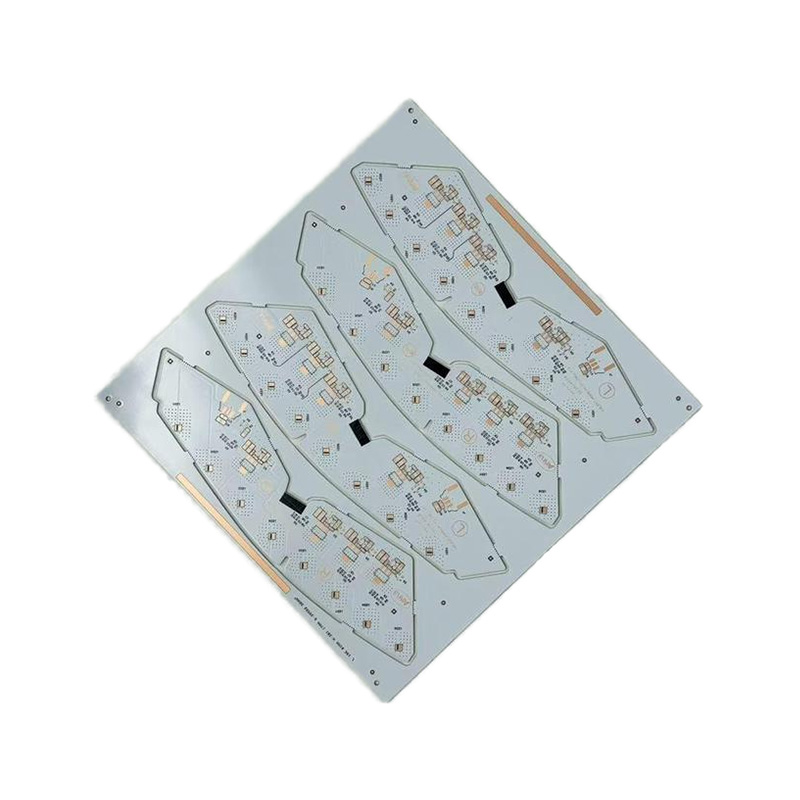
Fiberglass-Reinforced Plastic PCB material, particularly in its FR-4 form, remains the workhorse of the electronics industry due to its unparalleled balance of strength, insulation, manufacturability, and cost. From simple consumer gadgets to complex automotive systems, its variants—high-Tg, halogen-free, low-loss—extend its relevance into demanding niches. Successful implementation, however, relies on a deep understanding of its properties and partnering with a capable manufacturer. Anhui Hongxin Electronic Technology Co., Ltd., with its comprehensive material portfolio, advanced manufacturing capabilities, and international certifications, stands ready to transform robust FR-4 PCB designs into high-quality, reliable products for markets worldwide. By mastering the details of this fundamental material, engineers and procurement specialists can make informed decisions that optimize performance, cost, and time-to-market.
References
[1] Coombs, Clyde F., and Happy T. Holden. Printed Circuits Handbook, 7th Edition. McGraw-Hill Education, 2016. (A comprehensive reference on PCB materials and processes, including detailed sections on FR-4 properties and laminates).
[2] IPC-4101, Specification for Base Materials for Rigid and Multilayer Printed Boards. IPC, 2017. (The definitive industry standard that categorizes and specifies the requirements for various laminate materials, including all FR-4 slash sheets).
[3] Bergum, E. J. "Moisture and Printed Circuit Boards." CircuitTree Magazine, 2004. (Discusses the effects of moisture absorption on PCB materials like FR-4 and necessary handling procedures).

 LET'S CREATE THE FUTURE TOGETHER

Contact Us Anytime
Copyright © Anhui Hongxin Electronic Technology Co., Ltd. All Rights
Reserved.
privacy
Wholesale Printed Circuit Board Suppliers, Manufacturers

