


 English
  Español
  Français
The Ultimate Guide to Printed Circuit Boards: Types, Applications, and Manufacturing
At the heart of every modern electronic device lies a critical component: the Printed Circuit Board (PCB). This essential platform mechanically supports and electrically connects electronic components using conductive tracks, pads, and other features etched from copper sheets. As technology advances, the demand for more sophisticated, reliable, and specialized PCBs has grown exponentially. This guide delves into the world of PCBs, exploring their various types, key applications, and the intricate manufacturing processes behind them, providing valuable insights for engineers, purchasers, and technology enthusiasts alike. Based in the heart of China's PCB manufacturing hub, Anhui Hongxin Electronic Technology Co., Ltd. leverages over a decade of expertise to produce a vast array of high-quality PCB solutions for the global market, from rapid prototypes to high-volume orders.
Content
- 1 Understanding the Fundamentals of PCBs
- 2 Exploring Major Types of Printed Circuit Boards
- 3 Deep Dive into PCB Manufacturing Processes
- 4 Navigating PCB Selection and Procurement
- 5 Future Trends in PCB Technology
- 6 Frequently Asked Questions (FAQs)
- 6.1 1. What is the main difference between a standard FR-4 PCB and a high-Tg PCB?
- 6.2 2. Why is controlled impedance so important for some PCB designs?
- 6.3 3. How do I decide between ENIG and HASL for my PCB's surface finish?
- 6.4 4. What are the advantages of using a rigid-flex PCB over a traditional rigid board with connectors?
- 6.5 5. What does "halogen-free" mean in PCB materials, and why is it important?
- 7
- 8 References
Understanding the Fundamentals of PCBs
A Printed Circuit Board is more than just a green board with lines; it's the foundation of electronic functionality. Its primary role is to provide a stable physical structure for mounting components and a reliable electrical pathway for signals and power to travel between them. This eliminates the need for complex and error-prone hand-wiring, enabling mass production of consistent and compact electronic devices.
Core Functions and Basic Structure
The architecture of a standard PCB is layered and precise.
- Substrate (Laminate): The base material, typically FR-4 fiberglass, provides mechanical rigidity and electrical insulation.
- Copper Layer: Thin copper foil is laminated onto the substrate and etched to form the circuit pattern (traces, pads, vias).
- Solder Mask: The iconic green (or other colors) polymer layer that insulates copper traces and prevents solder bridges.
- Silkscreen: The white (or other colors) printing that adds component labels, logos, and test points for assembly and debugging.
Exploring Major Types of Printed Circuit Boards
The evolution of electronics has led to the development of specialized PCBs, each designed to meet specific physical, electrical, and thermal challenges. Understanding these types is crucial for selecting the right board for your application.
Single-Sided vs. Double-Sided PCBs
The simplest distinction lies in the number of conductive layers. This fundamental difference impacts complexity, cost, and application suitability.
While single-sided PCBs have components and copper traces on only one side of the substrate, double-sided PCBs feature conductive layers on both sides, connected by plated-through holes called vias[1]. This key architectural difference allows double-sided boards to host more components and support more complex circuits in a similar surface area.
| Feature | Single-Sided PCB | Double-Sided PCB |
|---|---|---|
| Conductive Layers | 1 | 2 |
| Circuit Density | Low | Moderate |
| Design Complexity | Simple | More Complex |
| Relative Cost | Lowest | Low to Moderate |
| Typical Applications | Basic toys, calculators, power supplies | Consumer electronics, automotive dashboards, LED lighting |
Multi-Layer PCBs: Complexity and Capability
For advanced electronics, multi-layer PCBs are indispensable. These boards consist of three or more conductive layers, separated by insulating prepreg (pre-impregnated) layers, laminated together under high heat and pressure. They are essential for complex devices like smartphones, servers, and medical equipment. Anhui Hongxin Electronic Technology Co., Ltd. specializes in manufacturing high-reliability boards from 4-layer PCBs for industrial controls all the way up to sophisticated 32-layer boards for high-speed computing applications.
Specialized PCB Technologies for Demanding Applications
Beyond layer count, material science drives PCB innovation. Several specialized types address unique performance requirements.
High-Frequency and RF PCBs
These boards are designed for applications involving high-frequency signals (typically above 1 GHz), such as in radar systems, satellite communication, and 5G infrastructure. They use specialized low-loss dielectric materials like PTFE (Teflon) or ceramic-filled hydrocarbons to maintain signal integrity and minimize attenuation[2]. The choice of material directly impacts the signal propagation speed and loss characteristics.
Metal Core PCBs (MCPCBs)
When thermal management is paramount, Metal Core PCBs provide the solution. They feature a base material made of aluminum or copper, which acts as a heat sink, drawing heat away from critical components like high-power LEDs, motor controllers, and power supplies. This extends component lifespan and improves system stability.
Rigid-Flex PCBs
Combining the best of both worlds, rigid-flex PCBs integrate rigid boards with flexible polyimide circuitry. This hybrid construction allows for three-dimensional packaging, reducing weight and improving reliability in space-constrained, moving, or high-vibration environments like cameras, medical devices, and aerospace systems. For designers looking to innovate in product form factor, understanding rigid-flex PCB design rules is critical to avoid mechanical stress and ensure longevity.
High-Tg and Thick Copper PCBs
Extreme environments demand robust materials. High-Tg (Glass Transition Temperature) PCBs, such as those offered by Hongxin, use substrates that can withstand higher operating temperatures without deforming, making them ideal for automotive under-hood electronics and high-power industrial gear. Thick Copper PCBs, with copper weights exceeding 3 oz per square foot, are engineered to carry exceptionally high currents, often found in power converters and heavy machinery.
Deep Dive into PCB Manufacturing Processes
Transforming a digital design into a physical, functional PCB is a multi-step, precision-driven process. At Anhui Hongxin Electronic Technology Co., Ltd., this process is supported by over 7 professional engineers with 15+ years of experience and stringent international certifications like IATF16949 and UL.
From Design to Prototype: Key Stages
The journey begins with a Gerber file and culminates in a tested board.
- Design & DFM Check: Engineering analysis ensures the design is manufacturable (DFM) and reliable.
- Material Preparation: Selecting the appropriate substrate (FR-4, high-Tg, halogen-free, etc.) and copper foil.
- Imaging & Etching: Using photolithography to transfer the circuit pattern onto the copper and chemically etching away the unwanted copper.
- Lamination & Layer Alignment: For multi-layer boards, layers are precisely aligned and bonded under heat and pressure.
- Drilling & Plating: Creating holes for vias and component leads, then plating them with copper to establish electrical connections between layers.
- Solder Mask & Surface Finish: Applying the protective solder mask and a surface finish (like HASL, ENIG, or Immersion Silver) to protect copper and ensure solderability.
- Electrical Testing & Final Inspection: Automated optical inspection (AOI) and electrical testing verify connectivity and functionality.
The Critical Role of Surface Finish
The surface finish protects the exposed copper from oxidation and provides a solderable surface. The choice of finish affects shelf life, soldering performance, and cost. For instance, while HASL is cost-effective and robust, ENIG provides a flat, oxidation-resistant surface ideal for fine-pitch components. A comprehensive suite of surface finish options is a hallmark of a capable manufacturer like Hongxin, ensuring the right solution for every project.
Choosing the right PCB partner and specifications is vital for project success. It involves balancing technical requirements, cost, and lead time.
Key Selection Criteria
Engineers and buyers must evaluate several factors.
- Layer Count & Complexity: Determines the board's fundamental capability to route the circuit.
- Material Properties: Dielectric constant (Dk), loss tangent (Df), Tg, and thermal conductivity must match the electrical and thermal demands.
- Quality & Certification: Certifications like ISO 9001, IATF 16949 (for automotive), and UL listing are non-negotiable for mission-critical applications. Anhui Hongxin holds all these certifications, providing a foundation of trust.
- Manufacturing Capability: Ability to handle the required technology, such as HDI PCB manufacturing steps for miniaturized designs or controlled impedance PCB testing for high-speed signals.
Prototyping vs. Mass Production
The approach to PCB acquisition differs significantly between the prototyping and production phases. Understanding the benefits of quick turn PCB prototyping can accelerate development cycles dramatically. A rapid prototype allows for design validation and functional testing before committing to high-volume production, saving time and cost in the long run. Hongxin supports this ecosystem fully, offering double-sided prototypes in as fast as 24 hours, while also being equipped for large-volume orders with competitive lead times, such as 6-7 days for bulk single/double-sided boards.
Future Trends in PCB Technology
The PCB industry continues to evolve, driven by trends in miniaturization, higher performance, and sustainability. The integration of more passive components within the board itself (embedding), the use of advanced materials for higher frequency applications, and a growing emphasis on halogen-free and environmentally friendly PCBs are shaping the next generation of circuit boards. Manufacturers at the forefront, like those in China's PCB Industrial Park where Hongxin is located, are continuously investing in R&D to meet these future demands.
Frequently Asked Questions (FAQs)
1. What is the main difference between a standard FR-4 PCB and a high-Tg PCB?
The core difference lies in the glass transition temperature (Tg). Standard FR-4 has a Tg typically around 130-140°C, while high-Tg materials have a Tg of 170°C or higher. This means high-Tg PCBs can withstand higher operating temperatures without softening, delaminating, or losing mechanical/electrical integrity, making them essential for high-power or high-heat applications.
2. Why is controlled impedance so important for some PCB designs?
Controlled impedance is critical for high-speed digital signals (like USB, HDMI, PCIe) and high-frequency RF signals. It ensures that the signal's integrity is maintained as it travels along a trace by matching the trace's impedance to the source and load. Mismatches cause signal reflections, leading to data errors, noise, and degraded performance. Proper stack-up design, precise trace geometry, and consistent dielectric properties are key to achieving controlled impedance.
3. How do I decide between ENIG and HASL for my PCB's surface finish?
Choose ENIG (Electroless Nickel Immersion Gold) for boards with fine-pitch components (like BGAs), requiring a flat surface for reliable soldering, excellent shelf life, or for gold wire bonding. Choose HASL (Hot Air Solder Leveling) for cost-sensitive projects with larger components, where the slight surface unevenness is acceptable, and where the thicker solder coating provides robust solder joints for through-hole parts.
4. What are the advantages of using a rigid-flex PCB over a traditional rigid board with connectors?
Rigid-flex PCBs offer several key advantages: reduced weight and space by eliminating connectors and cables, increased reliability due to fewer interconnections (which are common failure points), enhanced flexibility for dynamic folding or bending applications, and potentially simplified assembly into a 3D shape. They are ideal for compact, high-reliability devices.
5. What does "halogen-free" mean in PCB materials, and why is it important?
Halogen-free PCB materials are manufactured without using bromine or chlorine-based flame retardants, which are common in standard FR-4. When burned, halogens can produce toxic and corrosive dioxins. Halogen-free boards are safer for the environment and human health, especially in the event of a fire, and are often required by specific environmental regulations (like RoHS) and in consumer electronics from eco-conscious brands.
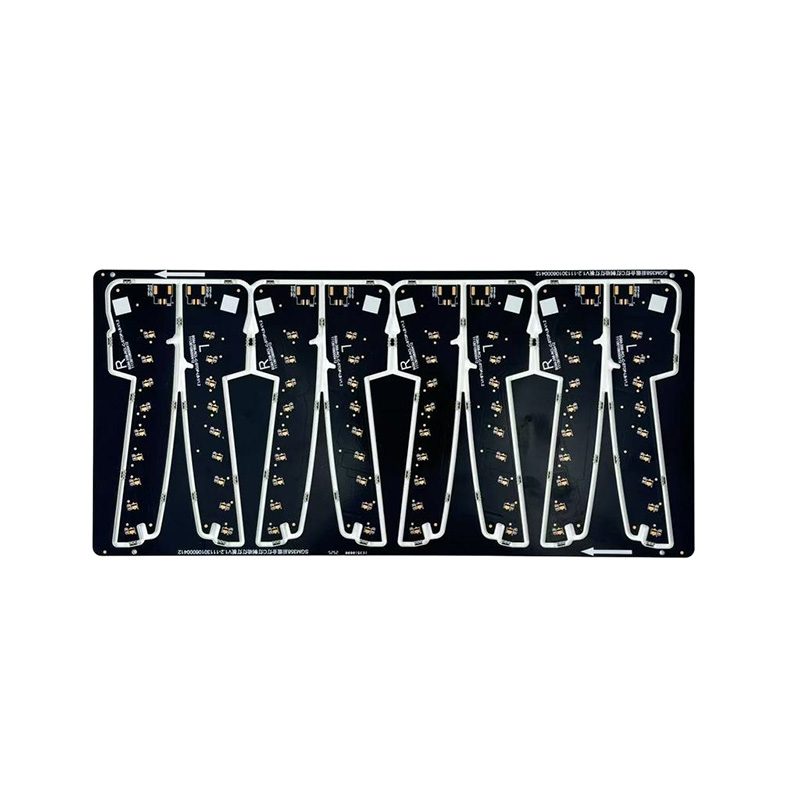
The world of Printed Circuit Boards is vast and technically rich, serving as the unheralded backbone of modern electronics. From simple single-sided boards to complex multi-layer, high-frequency, or rigid-flex assemblies, the right PCB choice hinges on a deep understanding of electrical requirements, environmental conditions, and manufacturing capabilities. Partnering with an experienced and certified manufacturer like Anhui Hongxin Electronic Technology Co., Ltd. provides access to a wide spectrum of technologies—from rapid prototyping to high-volume production—ensuring that your electronic innovations are built on a foundation of quality, reliability, and expertise. By considering factors like material selection, surface finish, and specialized requirements such as controlled impedance PCB testing, designers and engineers can fully leverage the potential of PCB technology to create the next generation of electronic devices.
References
[1] Coombs, C. F., & Holden, H. T. (2001). *Printed Circuits Handbook* (5th ed.). McGraw-Hill. [This reference provides foundational knowledge on double-sided and multi-layer PCB construction and via technologies.]
[2] Fjelstad, J. (2013). *Flexible Circuit Technology* (4th ed.). BR Publishing. [This source offers detailed material science insights on substrates for high-frequency and flexible circuit applications.]

 LET'S CREATE THE FUTURE TOGETHER

Contact Us Anytime
Copyright © Anhui Hongxin Electronic Technology Co., Ltd. All Rights
Reserved.
privacy
Wholesale Printed Circuit Board Suppliers, Manufacturers

