


 English
  Español
  Français
FR-4, RF PCB Materials & Metal Core PCB: A Complete Selection Guide
Content
FR-4 PCB Material: Properties, Grades, and Where It Fits
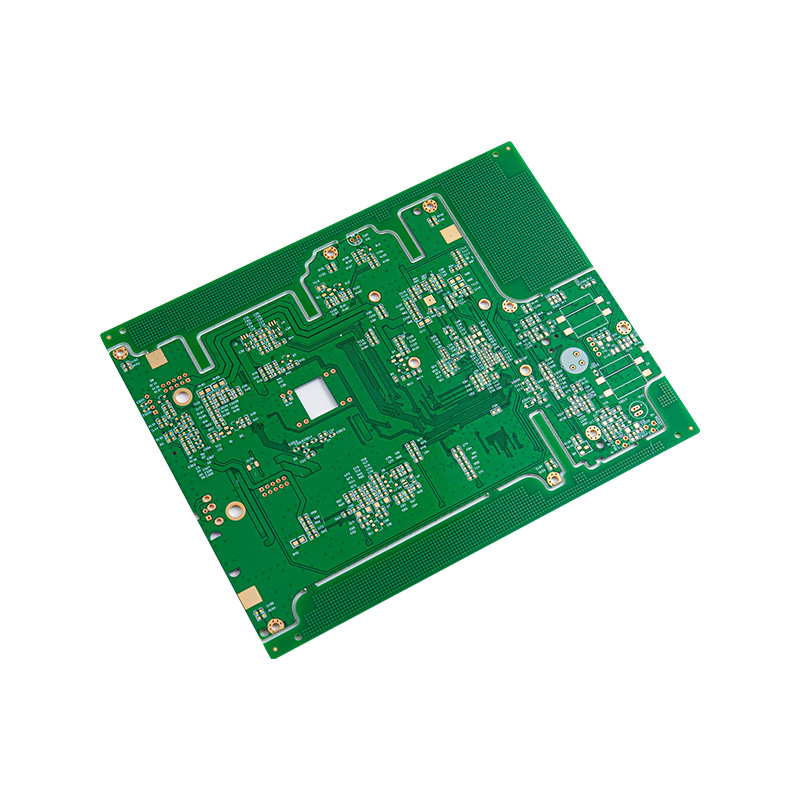
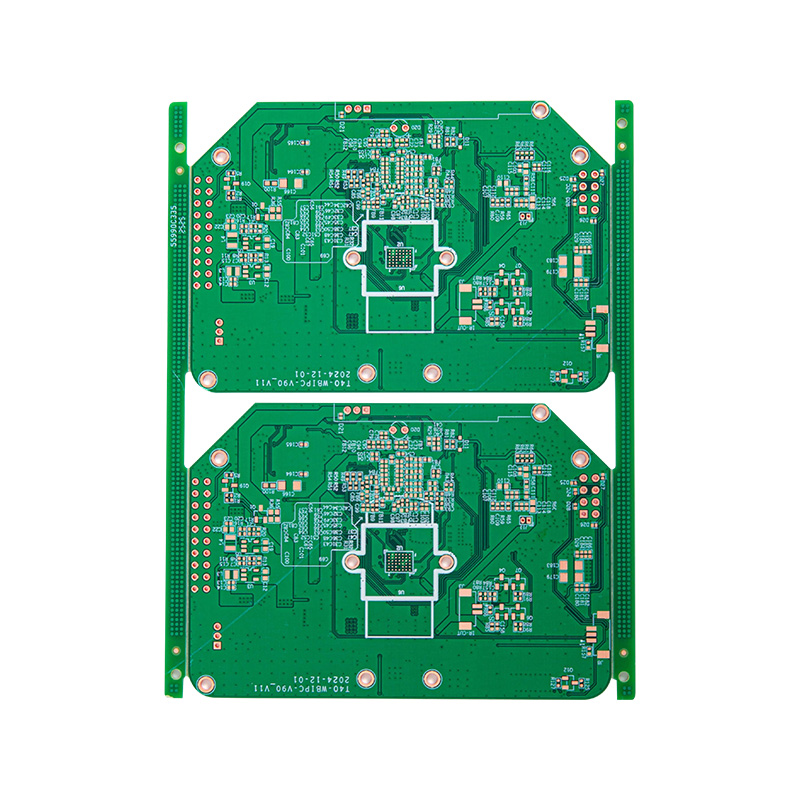
FR-4 is the most widely used PCB substrate material in the electronics industry, accounting for the majority of rigid PCB production globally. It is a glass-reinforced epoxy laminate — woven fiberglass cloth bonded with an epoxy resin binder — classified under NEMA standard LW 553. The "FR" designation stands for flame retardant; FR-4 boards self-extinguish when the ignition source is removed, meeting UL 94 V-0 flammability requirements.
Key electrical and mechanical properties of standard FR-4:
- Dielectric constant (Dk): 4.2–4.8 at 1 MHz — adequate for digital and low-frequency analog circuits but too lossy for RF work above ~1 GHz
- Dissipation factor (Df): 0.017–0.025 at 1 MHz — comparatively high, causing significant signal attenuation at microwave frequencies
- Glass transition temperature (Tg): standard grade 130–140 °C; mid-Tg 150–160 °C; high-Tg 170–180 °C
- Tensile strength: approximately 310 MPa, offering good mechanical rigidity for multi-layer stackups
- Thermal conductivity: 0.3–0.4 W/m·K — poor, limiting its use in high-power applications
FR-4 grades are differentiated primarily by Tg. High-Tg FR-4 (≥170 °C) is specified for lead-free reflow soldering processes, automotive electronics, and industrial control boards that endure sustained elevated temperatures. Standard Tg FR-4 remains suitable for consumer electronics, computing, and telecommunications equipment operating within normal temperature ranges.
Despite its limitations at high frequencies and temperatures, FR-4 offers an unmatched combination of processability, dimensional stability, chemical resistance, and cost — typically $2–$6 per square foot for raw laminate, far below specialty substrate materials. It supports fine-pitch multilayer designs down to 3/3 mil trace/space and is compatible with all standard PCB fabrication processes including laser drilling, direct imaging, and immersion surface finishes.
RF PCB Materials Selection: What Changes Above 1 GHz
RF and microwave circuit design demands substrate materials with low and stable dielectric constants, minimal dissipation factors, and tight property tolerances — requirements that eliminate standard FR-4 in most cases above 500 MHz. Signal integrity at RF frequencies depends critically on the substrate because the electromagnetic field extends into the dielectric; any loss or variation in Dk directly affects impedance control, insertion loss, and phase consistency.
Key Parameters in RF Substrate Selection
Two electrical parameters dominate RF material selection decisions:
- Dielectric constant (Dk / εr): determines transmission line dimensions and propagation velocity. Lower Dk values allow wider traces for a given impedance target, improving manufacturability. High-frequency laminates typically offer Dk values from 2.2 to 10.2, with tight tolerances of ±0.05 or better.
- Dissipation factor (Df / tan δ): directly determines insertion loss. Premium RF laminates achieve Df values of 0.0009–0.003 at 10 GHz, versus 0.02+ for standard FR-4, translating to dramatically lower signal loss in antenna feeds, power amplifiers, and filter networks.
Secondary considerations include coefficient of thermal expansion (CTE) — especially Z-axis CTE, which affects via reliability through thermal cycling — surface roughness of the copper foil, and moisture absorption, which can shift Dk and Df values in humid environments.
Common RF Laminate Families and Their Applications
| Material Family | Typical Dk | Typical Df (10 GHz) | Key Applications |
|---|---|---|---|
| PTFE / Ceramic-filled PTFE | 2.2 – 10.2 | 0.0009 – 0.003 | Millimeter-wave, radar, phased arrays, satellite |
| Hydrocarbon / Ceramic (e.g., RO4000 series) | 3.38 – 3.55 | 0.0027 – 0.004 | Automotive radar, base station antennas, power amplifiers |
| Low-loss FR-4 variants (e.g., Megtron 6) | 3.4 – 3.7 | 0.002 – 0.005 | High-speed digital, backplanes, 5G infrastructure boards |
| Liquid Crystal Polymer (LCP) | 2.9 – 3.0 | 0.002 – 0.004 | mmWave flexible antennas, wearables, IoT modules |
PTFE-Based Laminates
Polytetrafluoroethylene (PTFE) substrates — pure or reinforced with woven glass or ceramic fillers — deliver the lowest loss performance available in PCB form. Pure PTFE laminates offer Dk as low as 2.1 with Df below 0.001, but they are dimensionally unstable and difficult to process. Ceramic-filled PTFE composites (such as Rogers RT/duroid and TMM series) balance low loss with improved dimensional stability, making them the standard choice for demanding microwave and millimeter-wave designs from 10 GHz to well above 100 GHz. Cost is high — typically 10–30× that of FR-4 — and specialized drilling and etching processes are required.
Hydrocarbon Ceramic Laminates
Hydrocarbon ceramic laminates such as the Rogers RO4000 series have largely replaced PTFE in mid-frequency RF applications (1–30 GHz) because they combine near-PTFE electrical performance with FR-4-compatible fabrication processes. They can be drilled, laminated, and plated on standard equipment without the yield penalties of PTFE, reducing total fabricated board cost significantly. RO4350B, with Dk of 3.48 ± 0.05 and Df of 0.0037 at 10 GHz, is among the most widely specified RF laminate globally, used extensively in 77 GHz automotive radar modules and 5G small cell antennas.
Hybrid Stackups: Combining RF and Digital Layers
Modern RF systems increasingly integrate analog front-end circuits with digital signal processing on a single board. Hybrid multilayer stackups bond RF laminates on outer signal layers with standard FR-4 or low-loss FR-4 cores for the digital layers, separating high-frequency signal paths from cost-sensitive digital content. Bond film compatibility between dissimilar materials — particularly CTE mismatch and peel strength — is a critical engineering consideration in hybrid stackup design.
Metal Core PCB Material: Thermal Management Through the Substrate
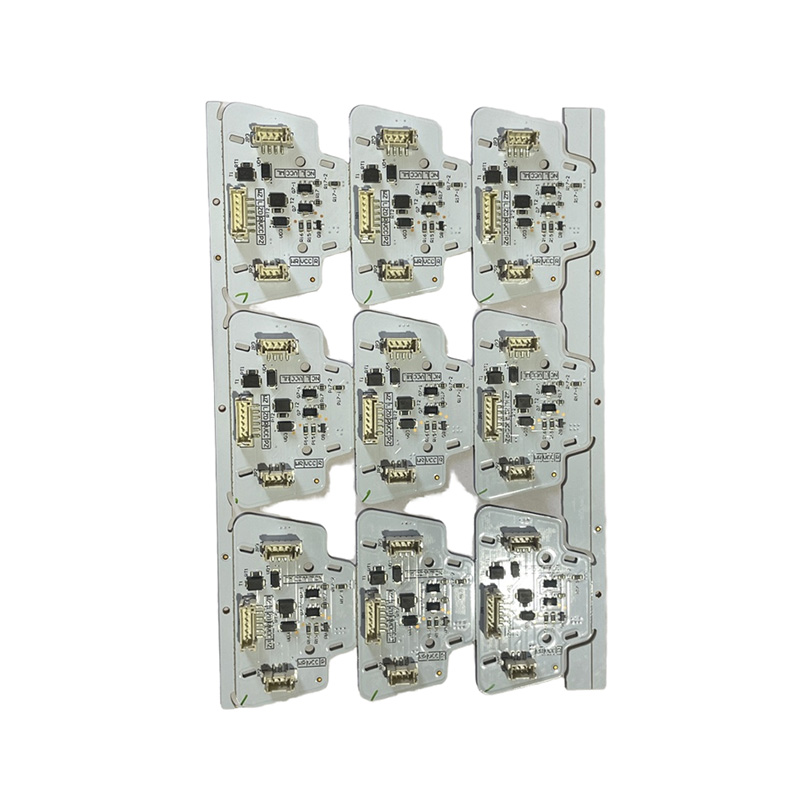
Metal core PCBs (MCPCBs) replace the conventional FR-4 dielectric core with a thermally conductive metal base — typically aluminum, copper, or steel — to dramatically improve heat dissipation from power components. Where FR-4 conducts heat at roughly 0.3 W/m·K, an aluminum-core MCPCB achieves 1–3 W/m·K through the dielectric layer and 205 W/m·K through the aluminum base itself, enabling heat to spread rapidly across the board and transfer to a heatsink or chassis.
MCPCB Layer Structure
A standard single-layer MCPCB consists of three bonded layers:
- Copper foil circuit layer — typically 1 oz (35 µm) to 3 oz (105 µm), carrying the electrical circuit
- Thermally conductive dielectric layer — a filled polymer layer 50–200 µm thick providing electrical isolation while minimizing thermal resistance; this layer's conductivity (0.8–3 W/m·K typical, up to 8+ W/m·K for premium grades) is the primary bottleneck in the thermal path
- Metal base layer — 1.0–3.2 mm thick, serving as the mechanical substrate and heat spreader
Aluminum Core vs. Copper Core vs. Steel Core
Aluminum-core MCPCBs dominate the market — most LED lighting boards, motor driver modules, and power supply PCBs use aluminum 5052 or 6061 alloy as the base. Aluminum offers thermal conductivity of 160–200 W/m·K, low weight, ease of machining, and low cost. It is the default choice for LED streetlights, automotive lighting, and consumer power electronics.
Copper-core MCPCBs provide superior thermal conductivity (385–400 W/m·K) for extreme heat flux applications — high-power laser diodes, IGBT modules, and power amplifiers generating heat densities above 50 W/cm². Copper is heavier and significantly more expensive than aluminum, restricting its use to cases where thermal performance is the primary constraint.
Steel-core MCPCBs (typically cold-rolled steel or stainless steel) sacrifice thermal performance (thermal conductivity ~50 W/m·K) for mechanical rigidity and electromagnetic shielding. They are used in motor control boards and applications requiring structural stiffness or magnetic shielding rather than maximum heat dissipation.
Dielectric Layer: The Thermal Bottleneck
The thermally conductive dielectric is the most performance-critical material choice in an MCPCB. Standard dielectric layers use aluminum oxide or boron nitride particles embedded in epoxy, achieving 1–3 W/m·K. High-performance grades incorporating larger-particle boron nitride or aluminum nitride fillers reach 6–9 W/m·K, reducing junction-to-board thermal resistance by up to 3× compared to standard grades — critical for high-brightness LED arrays and power modules where a few degrees of junction temperature reduction meaningfully extends component lifetime. Breakdown voltage of the dielectric layer is equally important; values of 3,000 V AC or higher are typical for industrial applications.
Design and Fabrication Considerations
MCPCBs are predominantly single- or double-sided because routing signals through the metal core requires thermally isolated through-holes — a process that adds cost and complexity. For multilayer thermal designs, insulated metal substrates (IMS) or embedded copper coin technologies are used instead. CTE mismatch between the metal base and the dielectric/copper layers must be managed during reflow soldering; aluminum's CTE of ~23 ppm/°C is roughly twice that of copper and significantly higher than ceramic components, making solder joint reliability a key reliability engineering concern in automotive and high-cycle applications.
Choosing the Right PCB Material: FR-4, RF Laminate, or Metal Core
The three material categories serve distinct design requirements with minimal overlap. A practical selection framework follows the primary constraint of the application:
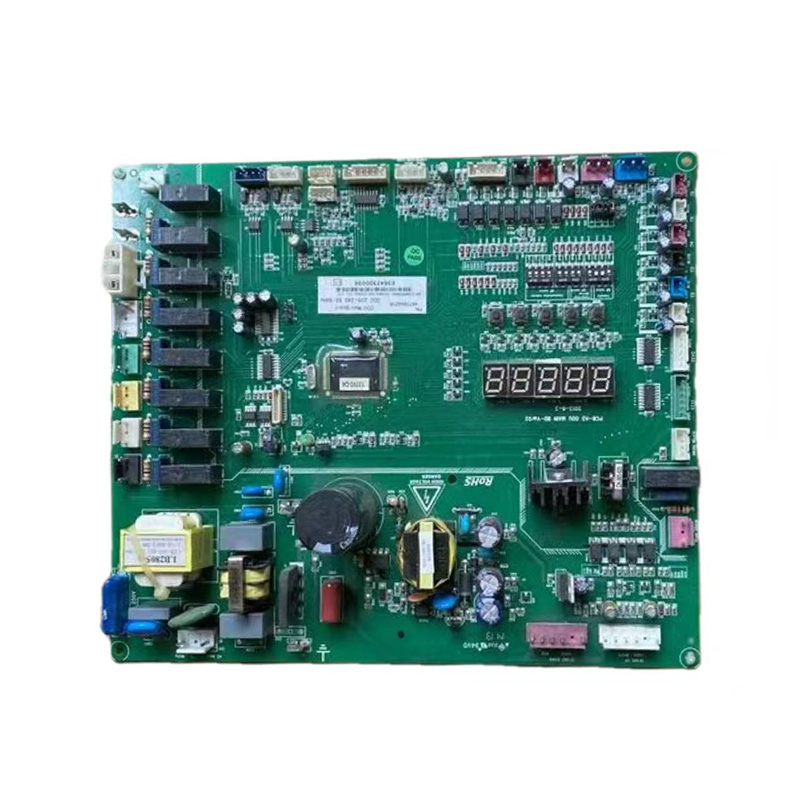
- Cost-driven, digital, or low-frequency analog (<500 MHz): FR-4 in the appropriate Tg grade. Covers the vast majority of consumer electronics, industrial controls, and computing hardware.
- RF/microwave signal integrity (500 MHz – 100+ GHz): Select an RF laminate based on frequency, loss budget, and fabrication compatibility. Hydrocarbon ceramic (RO4000 class) for 1–30 GHz in volume production; PTFE composites for highest-performance or millimeter-wave designs.
- Thermal management for power electronics or LED lighting: Metal core PCB with aluminum base for most applications; copper core where heat flux exceeds ~50 W/cm².
Hybrid applications — such as a 5G power amplifier module requiring both RF signal performance and high thermal dissipation — may combine an RF laminate signal layer with a metal backing plate or embedded thermal slug, illustrating that substrate selection is rarely a single-material decision in advanced designs.

 LET'S CREATE THE FUTURE TOGETHER

Contact Us Anytime
Copyright © Anhui Hongxin Electronic Technology Co., Ltd. All Rights
Reserved.
privacy
Wholesale Printed Circuit Board Suppliers, Manufacturers

