


 English
  Español
  Français
The Ultimate Guide to Printed Circuit Boards: Types, Applications, and Manufacturing
In the heart of every modern electronic device lies a critical component: the Printed Circuit Board. Often abbreviated as PCB, this foundational technology provides the physical platform and electrical connections for components to communicate, forming the nervous system of everything from smartphones to industrial machinery. Understanding PCB types, their specific applications, and the manufacturing nuances is crucial for engineers, procurement specialists, and anyone involved in electronics development. This guide delves deep into the world of PCBs, offering specific, actionable information to inform your next project.
Content
- 1 Understanding the Core: What is a Printed Circuit Board?
- 2 Decoding Major PCB Types and Their Applications
- 3 The PCB Manufacturing Process: From Design to Delivery
- 4
- 5 Partnering with a Professional PCB Manufacturer
- 6 Frequently Asked Questions (FAQs)
- 6.1 1. What factors most influence the cost of a PCB?
- 6.2 2. How do I choose between FR-4 and a High-Tg material?
- 6.3 3. What is the main advantage of using a rigid-flex PCB over separate rigid boards with connectors?
- 6.4 4. Why is surface finish important, and how do I select one?
- 6.5 5. What certifications should I look for in a PCB manufacturer?
Understanding the Core: What is a Printed Circuit Board?
A Printed Circuit Board is a laminated sandwich of conductive and insulating layers. The conductive layer, typically made of thin copper foil, is etched to form precise pathways—traces, pads, and vias—that connect electronic components such as resistors, capacitors, and integrated circuits. The insulating substrate holds everything together mechanically and electrically. The sophistication of a PCB can range from a simple single-sided board in a toy to a complex 32-layer board in advanced computing equipment.
Decoding Major PCB Types and Their Applications
Selecting the right PCB type is paramount to the performance, reliability, and cost-effectiveness of an electronic product. The industry offers a wide variety, each tailored for specific demands.
Based on Layer Count and Flexibility
Single-Sided & Double-Sided PCBs
- Construction: Single-sided boards have conductive copper on one side only, while double-sided have it on both, connected by plated-through holes.
- Best For: Simple, low-cost applications like consumer toys, basic power supplies, and LED lighting.
- Limitations: Lower component density and circuit complexity.
Multi-Layer PCBs (4-Layer to 32-Layer)
- Construction: Multiple conductive layers separated by insulating prepreg, laminated under heat and pressure.
- Best For: Complex electronics requiring high-speed signals, EMI shielding, and dense component packaging (e.g., servers, telecommunications, medical imaging).
When comparing board types, the choice hinges on complexity and electrical needs. Single-sided PCBs offer the lowest cost and simplest design but are unsuitable for complex circuits. Conversely, multi-layer PCBs enable sophisticated, high-speed designs at a higher cost and longer manufacturing time.
| Board Type | Typical Layer Count | Key Applications | Relative Cost |
|---|---|---|---|
| Single-Sided | 1 | Calculators, Timers | Lowest |
| Double-Sided | 2 | Automotive dashboards, Power converters | Low |
| Multi-Layer | 4-32 | Data servers, Network routers, Medical equipment | Moderate to High |
| High-Density Interconnect (HDI) | Any (with microvias) | Smartphones, Wearables | High |
Based on Specialized Materials and Construction
High-Frequency and RF PCBs
Signal integrity at high frequencies is a major challenge that standard FR-4 material cannot adequately address. This is where designing RF and microwave PCBs for optimal signal integrity becomes a specialized field. These boards use substrates like PTFE (Teflon) or ceramic-filled hydrocarbons, which have a stable dielectric constant and low loss tangent to minimize signal attenuation and distortion. They are essential in satellite communications, radar systems, and 5G infrastructure.
Metal Core PCBs (MCPCBs)
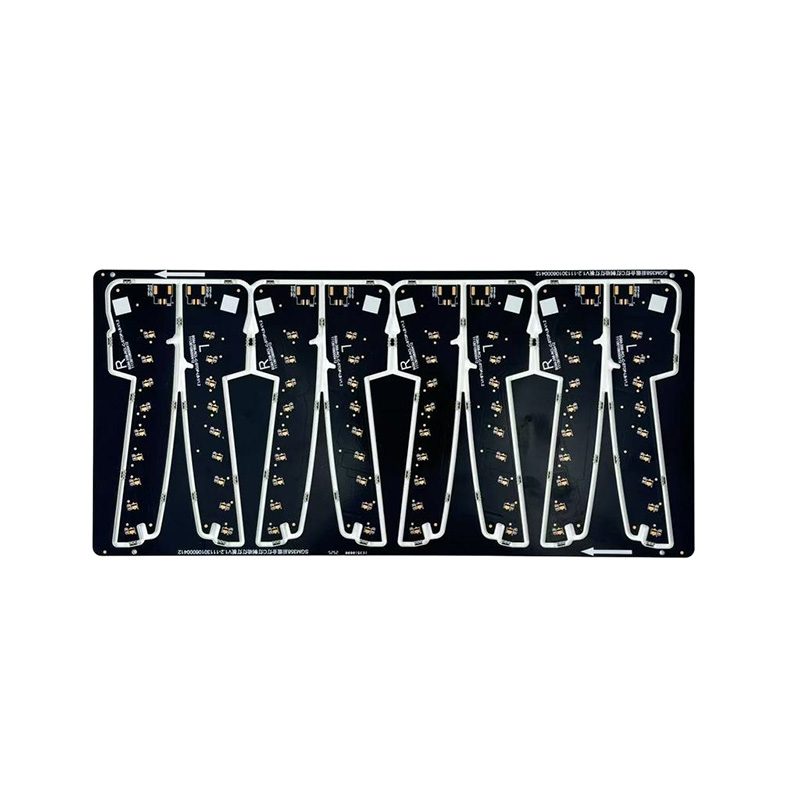
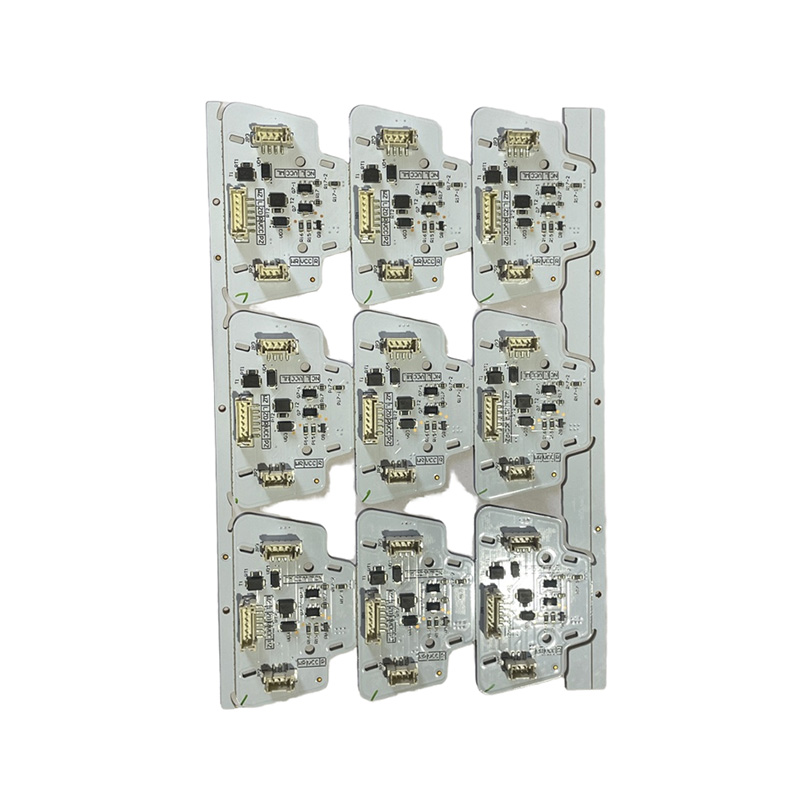
Thermal management is a critical design constraint for high-power applications. Metal Core PCBs, typically using aluminum or copper as the base layer, excel at thermal management solutions for high-power LED applications and power converters. The metal core acts as a heat sink, rapidly drawing heat away from components like LEDs or power transistors, thereby enhancing performance and longevity. This makes them indispensable in automotive lighting, high-brightness LED arrays, and power supplies.
High-Tg and Halogen-Free PCBs
As electronics become more powerful and subject to stricter environmental regulations, material stability is key. High-Tg (Glass Transition Temperature) PCBs use resins that remain stable at higher temperatures, preventing delamination and degradation during lead-free soldering or in hot operating environments. Halogen-free PCBs are manufactured without bromine or chlorine, making them safer and more environmentally friendly. The trend towards halogen-free PCB manufacturing for environmental safety is driven by global environmental directives like RoHS and WEEE.
Rigid-Flex and Flex PCBs
When a design demands both structural rigidity and dynamic flexibility, rigid-flex PCBs provide an elegant solution. They combine rigid boards for component mounting with flexible polyimide interconnects. This integration allows for benefits of rigid-flex PCB in aerospace and medical devices, where reliability under vibration, motion, and space constraints is paramount. They reduce connector points, enhance reliability, and allow for innovative, compact product designs in applications from foldable devices to implantable medical tools.
The PCB Manufacturing Process: From Design to Delivery
Turning a circuit schematic into a physical, reliable PCB is a multi-step, precision-driven process. While the exact steps vary with board complexity, the core workflow remains consistent.
- Step 1: Design & CAM Engineering: The process begins with design files (Gerber, drill files). Professional manufacturers perform Design for Manufacturability (DFM) checks to prevent costly errors.
- Step 2: Material Selection & Preparation: The appropriate laminate (FR-4, High-Tg, High-Frequency, Metal Core) is cut to panel size.
- Step 3: Imaging & Etching: A photoresist is applied, exposed to UV light through the circuit pattern film, and developed. The unwanted copper is then etched away.
- Step 4: Layer Alignment & Lamination: For multi-layer boards, inner layers are aligned and laminated under high pressure and temperature to form a solid panel.
- Step 5: Drilling & Plating: Holes for vias and component leads are drilled with high precision. The holes are then plated with copper to establish electrical connectivity between layers.
- Step 6: Solder Mask & Surface Finish: A protective solder mask layer (usually green) is applied, leaving only pads exposed. A surface finish (like HASL, ENIG, or Immersion Silver) is applied to protect the copper and ensure solderability.
- Step 7: Electrical Testing & Final Inspection: Every board undergoes rigorous electrical testing (like Flying Probe) to verify connectivity and isolation, followed by a visual and dimensional inspection.
Partnering with a Professional PCB Manufacturer
Choosing the right manufacturing partner is as critical as the design itself. A partner like Anhui Hongxin Electronic Technology Co., Ltd., brings essential value. Located in the China PCB Industrial Park in Anhui Province, our 20,000 square meter facility is equipped to handle a vast spectrum of PCB needs. With a team of seasoned engineers and comprehensive certifications including ISO9001, IATF16949, and UL, we ensure quality is embedded in every process.
Our capabilities directly address many of the specialized topics discussed. For instance, our expertise in metal core PCB manufacturing and thermal management solutions for high-power LED applications ensures your high-power designs run cool and reliable. We support the industry shift towards halogen-free PCB manufacturing for environmental safety with a range of certified materials. For complex, space-constrained projects, we produce advanced rigid-flex PCB assemblies that leverage the benefits of rigid-flex PCB in aerospace and medical devices. Furthermore, our engineering team is adept at designing RF and microwave PCBs for optimal signal integrity, utilizing high-frequency laminates to meet stringent performance criteria.
We understand that time-to-market is crucial. That's why we offer rapid prototyping with double-sided boards delivered in as fast as 24 hours, and a structured timeline for bulk orders, ensuring you receive high-quality boards—from simple double-sided to advanced 32-layer or HDI—when you need them, whether for prototyping or large-scale production.
Frequently Asked Questions (FAQs)
1. What factors most influence the cost of a PCB?
The primary cost drivers are board size, layer count, material type (standard FR-4 vs. high-frequency or metal core), special processes (like controlled impedance or blind/buried vias), order quantity, and chosen surface finish (ENIG is more expensive than HASL).
2. How do I choose between FR-4 and a High-Tg material?
Use standard FR-4 for most commercial applications with standard operating temperatures. Opt for High-Tg FR-4 (Tg > 170°C) if your board will undergo lead-free soldering (which has higher temperatures), operate in a high-heat environment, or requires enhanced long-term reliability.
3. What is the main advantage of using a rigid-flex PCB over separate rigid boards with connectors?
Rigid-flex PCBs eliminate the need for many connectors and cabling, which reduces assembly time, minimizes points of failure, improves resistance to vibration, and allows for more compact, lightweight, and reliable 3D packaging.
4. Why is surface finish important, and how do I select one?
The surface finish protects the exposed copper from oxidation and ensures good solderability. HASL is cost-effective for general use. ENIG (Immersion Gold) provides a flat surface, excellent for fine-pitch components and has good shelf life. Immersion Silver offers good performance at a mid-range cost. The choice depends on component type, soldering process, and required shelf life.
5. What certifications should I look for in a PCB manufacturer?
Key certifications include ISO 9001 (Quality Management), ISO 14001 (Environmental Management), IATF 16949 (for automotive industry), and UL listing (safety certification for materials). These ensure the manufacturer adheres to international standards for process control, consistency, and product safety.

 LET'S CREATE THE FUTURE TOGETHER

Contact Us Anytime
Copyright © Anhui Hongxin Electronic Technology Co., Ltd. All Rights
Reserved.
privacy
Wholesale Printed Circuit Board Suppliers, Manufacturers

