


 English
  Español
  Français
The Ultimate Guide to Printed Circuit Boards: Types, Applications, and Manufacturing
In the heart of modern electronics lies the Printed Circuit Board (PCB), the fundamental platform that mechanically supports and electrically connects electronic components. From simple consumer gadgets to complex aerospace systems, PCBs are indispensable. This comprehensive guide delves deep into the world of PCBs, exploring their various types, critical applications, and the intricacies of the manufacturing process, equipping you with the knowledge to make informed decisions for your next project.
Content
- 1 Understanding the Printed Circuit Board (PCB)
- 2 5 Key Types of Advanced PCBs and Their Specialized Uses
- 3 Choosing the Right PCB for Your Project: A Practical Framework
- 4 The PCB Manufacturing Process: From Design to Delivery
- 5 Frequently Asked Questions (FAQs)
- 5.1 1. What is the difference between a standard PCB and a High-Tg PCB?
- 5.2 2. When should I consider using a rigid-flex PCB over separate rigid boards with connectors?
- 5.3 3. How does a thick copper PCB handle high currents?
- 5.4 4. What are the main advantages of HDI technology?
- 5.5 5. What certifications should I look for in a PCB manufacturer for critical applications?
- 6
- 7 References
Understanding the Printed Circuit Board (PCB)
A Printed Circuit Board is a laminated sandwich structure of conductive and insulating layers. Its primary function is to provide a reliable, pre-designed pathway for electrical signals and power between components. The evolution from point-to-point wiring to the modern PCB has enabled the miniaturization, reliability, and mass production of all electronic devices we use today.
Core Components of a PCB
- Substrate (Laminate): The base insulating material, typically FR-4, which provides mechanical rigidity.
- Copper Layer: Thin copper foil laminated onto the substrate, etched to form conductive traces, pads, and planes.
- Solder Mask: The protective polymer layer (usually green) that prevents solder bridges and protects copper from oxidation.
- Silkscreen: The printed layer with letters, numbers, and symbols for component identification and assembly guidance.
5 Key Types of Advanced PCBs and Their Specialized Uses
Beyond standard boards, advanced applications demand specialized PCB technologies. Understanding these is crucial for selecting the right board for high-performance, reliability, or unique physical constraints.
1. High-Tg and High-Frequency PCBs
These boards are engineered for demanding environments. High-Tg (Glass Transition Temperature) PCBs utilize substrates that can withstand higher temperatures before softening, making them essential for lead-free soldering processes and high-power applications. In contrast, high-frequency PCBs use specialized materials like PTFE or ceramic-filled hydrocarbons to ensure minimal signal loss at microwave and radio frequencies, which is critical for 5G infrastructure and radar systems.
The choice between a standard FR-4, a High-Tg FR-4, and a dedicated high-frequency material fundamentally depends on the operational thermal and electrical requirements of the circuit. For instance, a power supply unit may require High-Tg, while a satellite communication module will necessitate a high-frequency board.
| Feature | Standard FR-4 PCB | High-Tg PCB | High-Frequency PCB |
|---|---|---|---|
| Core Material | Standard Epoxy Resin | Enhanced Epoxy/Polyimide | PTFE, Ceramic, Hydrocarbon |
| Primary Advantage | Cost-Effectiveness | Thermal Reliability | Signal Integrity |
| Typical Application | Consumer Electronics | Automotive, Industrial Controls | RF/Microwave, Telecom |
2. Metal Core PCBs (MCPCBs) and Thick Copper PCBs
Both are solutions for thermal management but through different mechanisms. Metal Core PCBs, often using aluminum or copper bases, excel at dissipating heat away from high-power components like LEDs and motor controllers. On the other hand, thick copper PCBs incorporate copper layers that can be 3 oz/ft² to over 20 oz/ft², allowing them to carry very high currents and also act as a heat spreader, ideal for power converters and automotive systems.
While an MCPCB conducts heat laterally through its metal substrate to a heat sink, a thick copper board manages heat through the mass of its conductive layers and is integral to the power circuitry itself.
| Aspect | Metal Core PCB (MCPCB) | Thick Copper PCB |
|---|---|---|
| Heat Management Method | Lateral Dissipation via Substrate | Vertical Spreading via Copper Mass |
| Key Design Feature | Dielectric Insulating Layer | Extremely Wide/Thick Traces |
| Best For | High-Power LEDs, Spot Cooling | High-Current Circuits, Power Electronics |
3. Rigid-Flex PCBs and HDI Boards
These technologies push the boundaries of miniaturization and mechanical design. Rigid-flex PCBs combine the stability of rigid boards with the flexibility of thin, polyimide-based circuits, allowing for three-dimensional packaging that reduces weight and connection points in devices like cameras and medical implants. Meanwhile, High-Density Interconnect (HDI) boards achieve extremely fine lines and spaces, use microvias and buried vias, and allow for more components in a smaller area, which is the cornerstone of modern smartphones and wearable technology.
The decision often hinges on whether the primary challenge is spatial (solved by HDI) or mechanical integration (solved by rigid-flex). A modern smartwatch might use an HDI board for its dense processor section and a rigid-flex connection to a separate sensor module.
| Parameter | Rigid-Flex PCB | HDI PCB |
|---|---|---|
| Primary Benefit | 3D Packaging, Dynamic Flexing | Component Density, Miniaturization |
| Key Technology | Flexible Polyimide Layers | Microvias, Sequential Lamination |
| Common Use Case | Aerospace, Medical Devices | Mobile Phones, High-End Computing |
Choosing the Right PCB for Your Project: A Practical Framework
Selecting the correct PCB type involves a careful balance of electrical, thermal, mechanical, and budgetary considerations.
Step 1: Define Core Requirements
- Electrical Performance: Determine signal frequency, current load, and impedance control needs.
- Thermal Load: Calculate heat generation from components like processors, power ICs, or LEDs.
- Mechanical Environment: Assess space constraints, vibration, and whether the board needs to bend or fit an irregular shape.
- Reliability Standards: Define the industry certifications required (e.g., automotive, medical).
Step 2: Material and Technology Selection
Based on the requirements, narrow down the material and construction type. For example, a high-power automotive control unit might lead you to a thick copper PCB with a high-Tg material, while a compact RF sensor module would point towards a high-frequency PCB with possible HDI features.
Step 3: Partner with a Capable Manufacturer
The complexity of advanced PCBs demands a manufacturer with proven expertise, comprehensive process capabilities, and rigorous quality control. This is where partnering with a specialist like Anhui Hongxin Electronic Technology Co., Ltd. becomes invaluable. Located in the China PCB Industrial Park, our 20,000 square meter facility is equipped to handle the full spectrum of PCB technologies discussed. With over 7 engineers boasting 15+ years of experience, we produce everything from simple double-sided boards to sophisticated 32-layer, rigid-flex, and metal-based boards. Our commitment is reflected in our international certifications (ISO9001, IATF16949, UL) and our flexible service, offering rapid prototyping—with double-sided prototypes in as fast as 24 hours—and reliable volume production for global markets.
The PCB Manufacturing Process: From Design to Delivery
Understanding the manufacturing journey underscores the importance of choosing a qualified partner.
Stage 1: Design & Pre-Production Engineering
- Design file (Gerber, ODB++) review and DFM (Design for Manufacturability) analysis.
- Process planning and material preparation based on the PCB type (e.g., selecting the right high-Tg laminate or metal core).
Stage 2: Core Fabrication Stages
Imaging and Etching
- Applying photoresist and using UV light to transfer the circuit pattern onto the copper layer.
- Chemical etching removes unwanted copper, leaving the desired circuit traces.
Layer Alignment and Lamination
- For multilayer boards, aligning inner and outer layers precisely.
- Stacking layers with prepreg (bonding material) and applying heat and pressure to fuse them into a solid board.
Drilling and Plating
- Drilling holes for vias and component leads.
- Electroplating deposits copper onto the hole walls to establish electrical connectivity between layers.
Stage 3: Finishing and Testing
- Applying surface finish (e.g., HASL, ENIG, Immersion Silver) to protect exposed copper and ensure solderability.
- Applying solder mask and silkscreen.
- Performing rigorous electrical testing (Flying Probe, Fixture Test) and automated optical inspection (AOI) to verify quality[1].
Frequently Asked Questions (FAQs)
1. What is the difference between a standard PCB and a High-Tg PCB?
A standard PCB, often using FR-4 material, has a lower glass transition temperature (typically ~130-140°C). A High-Tg PCB uses a reinforced resin system that raises the Tg to 170°C or higher, providing superior thermal resistance, mechanical stability, and reliability in high-temperature or prolonged heating environments, such as in automotive under-hood electronics.
2. When should I consider using a rigid-flex PCB over separate rigid boards with connectors?
You should consider a rigid-flex PCB when your design requires improved reliability by eliminating connector points, needs to fit into a compact or moving assembly (like a folding device or a robotic arm), or aims to reduce overall weight and assembly time. The integrated connection is more robust against vibration and corrosion.
3. How does a thick copper PCB handle high currents?
A thick copper PCB incorporates copper layers that are significantly thicker than the standard 1 oz/ft². This increased cross-sectional area of the copper traces dramatically reduces electrical resistance, allowing the board to carry high currents (tens to hundreds of amps) with minimal voltage drop and overheating. The thick copper also acts as an excellent thermal conductor, helping to dissipate the generated heat.
4. What are the main advantages of HDI technology?
High-Density Interconnect (HDI) technology offers several key advantages: it enables significant size and weight reduction of the end product, allows for the use of finer-pitch advanced components (like BGA chips), improves electrical performance due to shorter signal paths and better integrity, and can enhance reliability through advanced via structures like blind and buried vias[2].
5. What certifications should I look for in a PCB manufacturer for critical applications?
For critical applications in automotive, medical, or aerospace industries, look for manufacturers with robust quality management system certifications. Essential certifications include ISO 9001 (Quality Management), IATF 16949 (Automotive Quality), ISO 13485 (Medical Devices), and UL listing (Safety). Anhui Hongxin Electronic Technology Co., Ltd., for instance, holds ISO9001, ISO14001, ISO45001, IATF16949, and UL certifications, ensuring a controlled and reliable process for demanding projects.
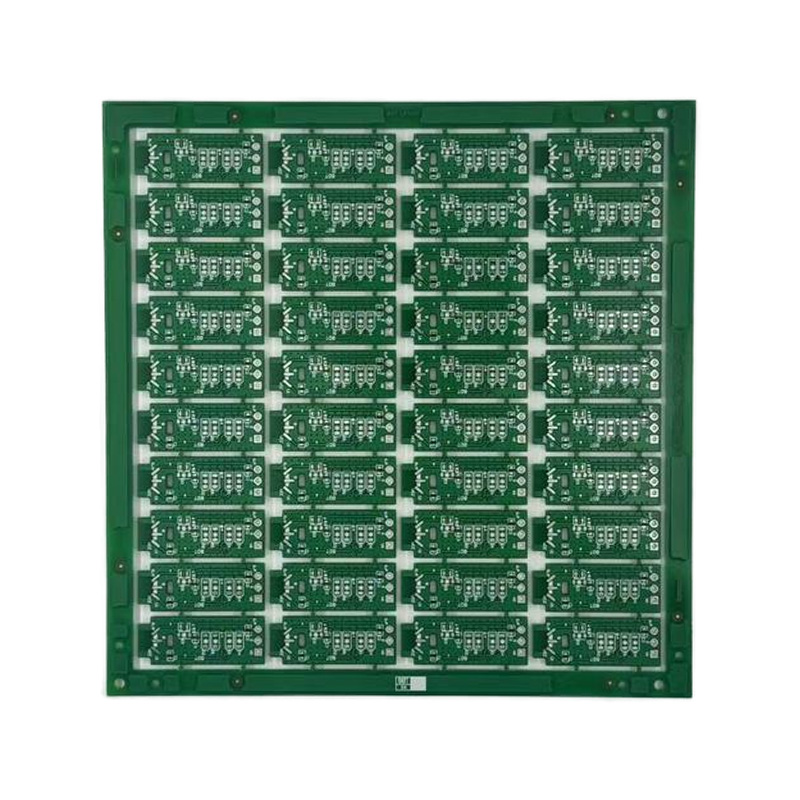
The world of Printed Circuit Boards is vast and specialized. From the foundational standard boards to advanced solutions like high-frequency PCBs, metal core PCBs, and rigid-flex PCBs, each type serves a unique purpose in enabling modern technology. Success hinges on a clear understanding of your project's requirements and partnering with a capable, certified manufacturer that can translate those needs into a reliable, high-quality product. By considering the factors outlined in this guide, you are well-equipped to navigate the PCB landscape and make choices that ensure the performance and durability of your electronic designs.
References
[1] Coombs, C. F., & Holden, H. T. (Eds.). (2016). Printed Circuits Handbook (7th ed.). McGraw-Hill Education. (Cited for PCB manufacturing testing procedures).
[2] Ritchey, L. W., & Zasio, J. J. (2012). Right the First Time: A Practical Handbook on High-Speed PCB and System Design, Volume 2. Speeding Edge. (Cited for advantages of HDI technology and signal integrity).

 LET'S CREATE THE FUTURE TOGETHER

Contact Us Anytime
Copyright © Anhui Hongxin Electronic Technology Co., Ltd. All Rights
Reserved.
privacy
Wholesale Printed Circuit Board Suppliers, Manufacturers

