


 English
 Español
 Français

Automotive PCB Market Grows Rapidly with EV, ADAS and In-Vehicle Infotainment Systems
The global automotive industry is undergoing its most profound electrification shift in decades, and printed circuit boards are right at the center of it. Electric vehicles (EVs) rely on electronics for nearly every critical function, from battery management to powertrain control, while advanced driver-assistance systems (ADAS) add radar, camera, and lidar processing capacity. Together, these trends create sustained, multi-year demand for automotive-qualified PCBs that far outlasts the typical consumer product cycle.
Automotive PCBs operate under far harsher conditions than consumer boards. They must survive wide temperature swings (often -40°C to 125°C and beyond), sustained mechanical vibration and shock, humidity, and exposure to chemicals over a 10–15+ year service life. This is why vehicle-grade fabrication follows stringent IPC standards (including IPC-A-600, IPC-6012, and the more demanding IPC-6013 for flex and rigid-flex), supplemented by OEM-specific reliability testing such as thermal cycling, thermal shock, highly accelerated stress testing (HAST), and mechanical fatigue validation.
Different vehicle subsystems call for different PCB technologies. Rigid FR-4 boards are used in general control units and infotainment; aluminum-based PCBs are preferred for LED headlamps, motor controllers, and power modules where heat dissipation is critical; flexible and rigid-flex PCBs save space in interior systems, sensor modules, and camera modules. High-layer and HDI boards increasingly appear in ADAS domain controllers and in-vehicle computers, where many sensors feed a single high-performance compute unit.
The main application segments include battery management system (BMS) boards that monitor cell voltage and temperature, on-board chargers (OBC) and DC-DC converters, ADAS sensor and processing boards, domain controllers, telematics units, and in-car infotainment displays. Power-density requirements continue to rise, pushing designers toward thicker copper weights, controlled impedance, and robust power-and-ground structures.
Automotive OEMs enforce strict quality and compliance regimes beyond consumer markets. Every batch must be fully traceable — from laminate lot numbers to production parameters — and PCBs must satisfy RoHS, REACH, and increasingly halogen-free requirements. Many Tier-1 suppliers also require IATF 16949 quality management certification and PPAP (Production Part Approval Process) documentation before a design enters series production.
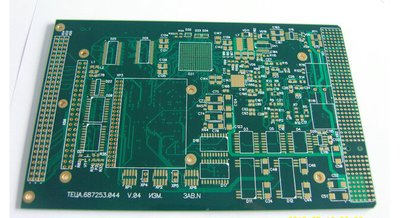
Supply chains are reorganizing to sit closer to automotive assembly. As EV production expands in China, Southeast Asia, Europe, and North America, PCB manufacturers are aligning capacity and technical support with regional OEM clusters. This localization shortens logistics lead times and supports just-in-time automotive manufacturing, while buyers evaluate suppliers on automotive certification, defect rates, and long-term supply stability rather than unit price alone.
As global EV penetration continues to climb and vehicles progressively add more sensors, compute power, and software-defined features, automotive PCB demand is expected to remain one of the steadiest and most resilient growth segments in the electronics interconnect industry. For PCB suppliers, the reward is long, high-volume programs; for buyers, the priority is a partner proven in automotive-grade quality.
Recommended Products

 LET'S CREATE THE FUTURE TOGETHER

Contact Us Anytime
Copyright © Anhui Hongxin Electronic Technology Co., Ltd. All Rights
Reserved.
privacy
Wholesale Printed Circuit Board Suppliers, Manufacturers

