


 English
 Español
 Français

Electronic Printed Circuit Boards: Types, Applications, and Manufacturing
Every product that plugs in, powers up, or switches on depends on one quiet workhorse: the electronic printed circuit. From the refrigerator humming in your kitchen to the headlight module guiding a car through fog, this thin laminate of copper and resin is where modern electronics actually live. We have been fabricating these boards in the Guangde Economic Development Zone of Anhui Province since 2013, and if one lesson from a decade of production stands out, it is that a reliable circuit board is never an accident. It comes from careful material selection, disciplined process control, and honest communication with the engineers who design it. In this guide, we explain what an electronic printed circuit is, how the main board types differ, and how to match the right construction to your application.
Content
What Is an Electronic Printed Circuit?
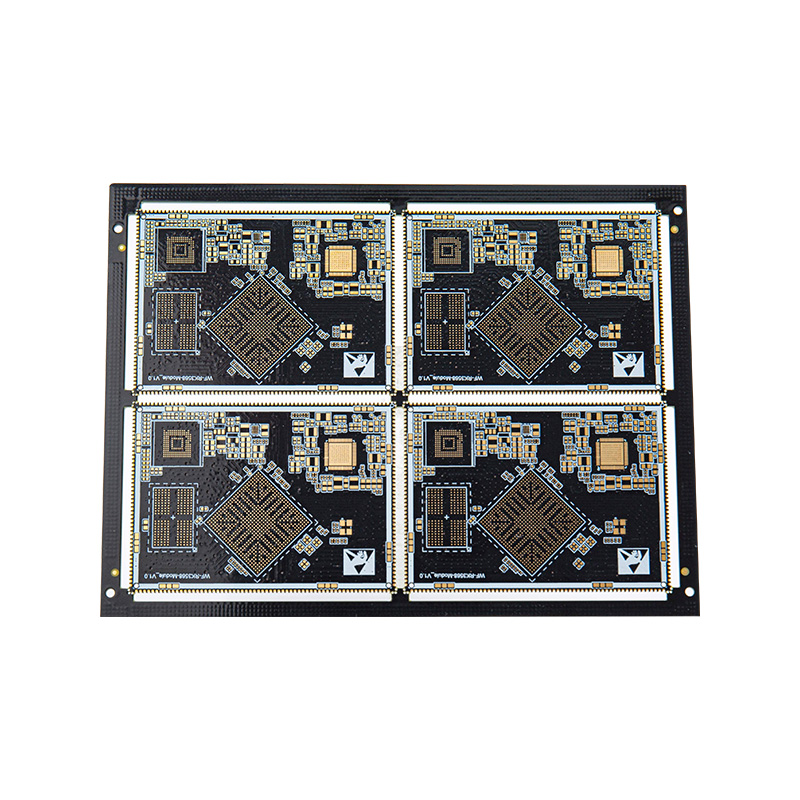
An electronic printed circuit is a non-conductive substrate, most commonly fiberglass-reinforced epoxy known as FR4, onto which conductive copper pathways are formed through imaging, plating, and etching. These copper traces replace the tangled point-to-point wiring of early electronics, routing signals and power precisely between components while the laminate holds everything mechanically in place.
A finished board is really a stack of functional layers, each doing a specific job:
- Copper foil forms the traces, pads, and planes that carry current.
- The dielectric substrate, whether FR4, metal, or ceramic, insulates and supports the circuit.
- Solder mask, the familiar green or black coating, protects copper from oxidation and prevents solder bridges during assembly.
- Silkscreen legends mark component references, polarity, and test points for assemblers.
That sounds simple, but tolerance windows in etching, drilling, and lamination are measured in microns. A 3/3 mil line-width and spacing requirement leaves very little room for process drift, which is why seasoned manufacturers treat every design as a precision product rather than a commodity.
The Main Types of Electronic Printed Circuits
Board classification generally follows three axes: layer count, base material, and performance features. Knowing where your project sits on each axis is the fastest way to control both cost and reliability.
Single-Sided and Double-Sided Boards
Single-sided boards carry copper on one layer only, making them the most economical choice for simple products such as LED lighting and basic power supplies. Double-sided boards add a second copper layer connected through plated through-holes, roughly doubling routing space while staying cost-effective. A large share of the boards we ship, especially for power and automotive electronics, are double-sided designs, including lead-free boards built specifically for power and automotive applications.
Multilayer Boards
When routing demands exceed two layers, we laminate alternating sheets of copper and prepreg into a single rigid structure, from 4 layers up to 32. Multilayer construction shortens signal paths, provides dedicated ground and power planes, and supports the high-density layouts modern products require. A typical example from our own line is a four-layer green OSP board used in industrial and consumer equipment.
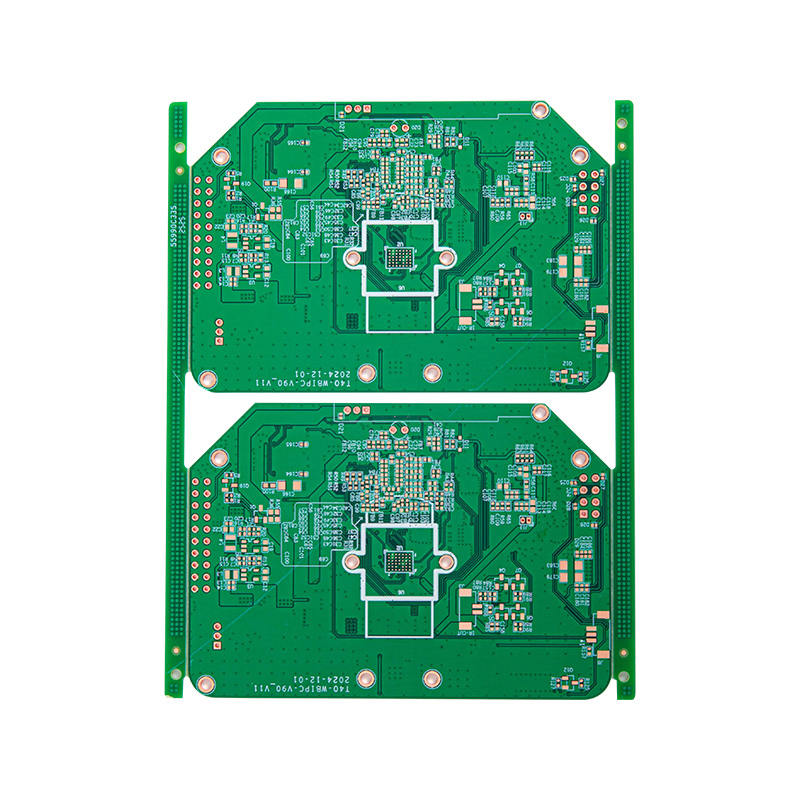 4 Layers Green OSP PCBA four-layer multilayer PCB built on high-Tg FR-4 with green solder mask and OSP finish, illustrating how multilayer construction supports dedicated planes and dense routing in industrial and consumer equipment.View Product →
Specialty Constructions
Beyond standard stack-ups, several specialized constructions solve specific engineering problems:
- HDI boards use microvias and fine lines to pack more interconnects into less space.
- Thick copper and high-power boards handle heavy current in power conversion and motor drives.
- High-frequency laminates preserve signal integrity in RF and communication products.
- Metal-core and aluminum boards pull heat away from LEDs and power devices.
- Flex and rigid-flex circuits bend where rigid boards cannot, ideal for compact or moving assemblies.
For a deeper walkthrough of the trade-offs, our guide to single, double, and multilayer PCB types covers the selection process in detail.
| Board Type | Key Construction Feature | Typical Applications |
|---|---|---|
| Single-sided | Copper on one layer | LED lighting, simple power supplies |
| Double-sided | Copper on both sides with plated through-holes | Power electronics, automotive modules |
| Multilayer (4-32 layers) | Laminated inner layers with ground and power planes | Industrial control, communications, medical devices |
| HDI | Microvias and fine-line traces | Compact consumer electronics |
| Metal core / aluminum | Thermally conductive base layer | LED drivers, power conversion |
| Flex / rigid-flex | Bendable polyimide substrate | Wearables, automotive interiors |
Materials and Surface Finishes Matter More Than You Think
The base material determines how a board behaves under heat, current, and stress. Standard FR4 covers most cost-sensitive applications, while high-Tg FR4 withstands the higher reflow temperatures of lead-free assembly. Halogen-free laminates meet stricter environmental requirements, and metal substrates such as aluminum or copper cores dissipate heat in LED and power designs. Ceramic and high-frequency laminates serve RF work where dielectric stability is critical. When thermal management is the priority, a single-sided aluminum PCB is often the most direct answer.
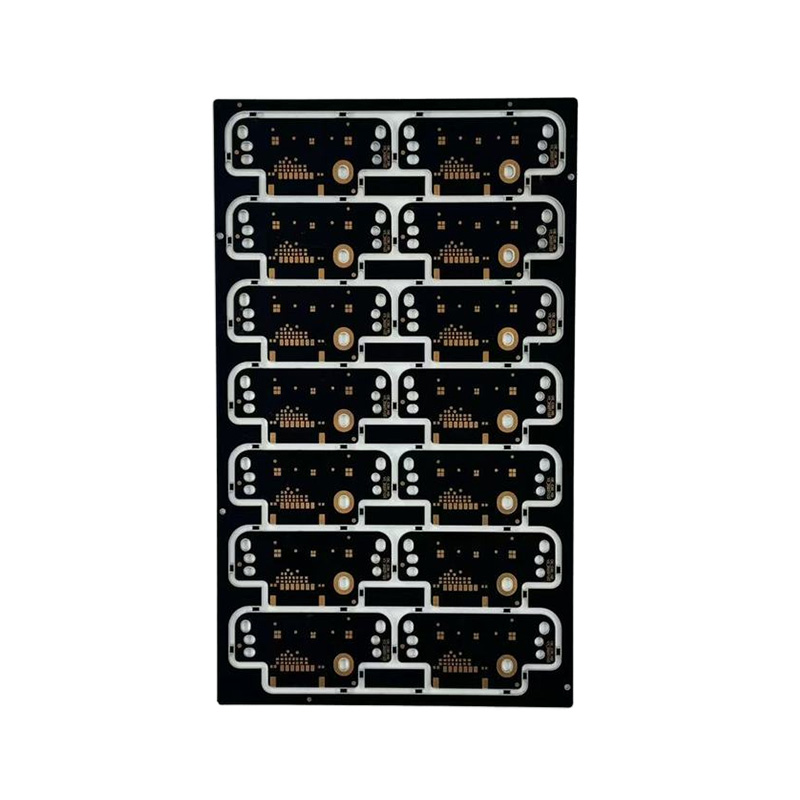 Single-Sided Aluminum PCBAn aluminum-base PCB that transfers heat away from high-power components far better than FR4, making it a practical choice when thermal management is the priority in LED lighting and power designs.View Product →
Surface finish is the other decision engineers sometimes underestimate, because it directly affects solderability, shelf life, and assembly cost:
- OSP is economical and leaves perfectly flat pads, suited to fine-pitch assembly.
- Lead-free solder (HASL) is robust and budget-friendly for general-purpose boards.
- Immersion gold and gold plating provide flat, oxidation-resistant, wire-bondable surfaces for high-reliability and gold-finger applications.
Matching the finish to your assembly process and operating environment prevents avoidable field failures later.
From Design File to Finished Board
Customers often ask what happens between uploading Gerber files and receiving boards. In our plant, the flow follows ten disciplined steps:
- Engineering review of Gerber data, checking manufacturability and stack-up.
- Inner-layer imaging and etching for multilayer builds.
- Lamination of copper and prepreg layers under heat and pressure.
- Precision drilling of through-holes and vias.
- Electroplating to metallize the hole walls.
- Outer-layer imaging and etching.
- Solder-mask application and curing.
- Surface finish application.
- Electrical testing and automated optical inspection.
- Routing, final inspection, and packing.
Turnaround depends on complexity. Double-sided prototypes can leave our floor in as little as 24 hours, while batch orders of single- and double-sided boards ship in 6 to 7 days. Four to 8 layer boards take 9 to 20 days, 10 to 16 layer boards take 20 to 25 days, and HDI constructions ship within 25 days. Those figures matter most during design validation, when every day of waiting delays the next iteration.
Matching Boards to Real-World Applications
The same copper-and-resin fundamentals serve very different industries, each with its own reliability bar. Consumer and power applications prioritize cost at volume; industrial control demands long service life; medical equipment requires consistent quality because failures are unacceptable at the bedside; and automotive products must survive vibration, temperature swings, and strict audits, which is why our plant operates under IATF16949 certification alongside ISO9001, ISO14001, ISO45001, and UL approval.
We also extend beyond bare boards into printed circuit board assembly. The PCBA we build for oxygen concentrators is a good example: the finished assembly, not just the bare board, must meet medical-grade expectations. Offering fabrication and assembly under one roof shortens the feedback loop and removes a layer of coordination from your supply chain.
 Oxygen Concentrator PCBAA printed circuit board assembly for oxygen concentrators built to medical-grade reliability expectations, showing why having fabrication and assembly handled by one supplier simplifies the supply chain.View Product →
Choosing an Electronic Printed Circuit Manufacturer
Price per square meter is easy to compare; everything else is not. When customers evaluate suppliers, including us, we encourage them to look at four things:
- Certification scope: ISO9001 covers baseline quality, IATF16949 covers automotive discipline, and UL covers product safety.
- Engineering depth: our team includes seven engineers with more than fifteen years of hands-on experience, and they review every design before production begins.
- Delivery flexibility: the same line should handle a 24-hour prototype and a volume batch without lowering its quality standards.
- Communication: quoting speed, DFM feedback, and honest answers about what a design can and cannot achieve.
You can review the full scope of our service capabilities on our service page, from initial quoting through after-sales support.
An electronic printed circuit may look like a passive green rectangle, but it is a precision device that every other component in your product depends on. Choosing the right layer count, material, and finish, and a manufacturer who treats those choices seriously, will pay for itself many times over in reliability and time to market. If you are evaluating a new design or searching for a production partner, our engineers are happy to review your files and provide a prompt quote. It has been the part of this work we have enjoyed most since 2013.

 LET'S CREATE THE FUTURE TOGETHER

Contact Us Anytime
Copyright © Anhui Hongxin Electronic Technology Co., Ltd. All Rights
Reserved.
privacy
Wholesale Printed Circuit Board Suppliers, Manufacturers

